Deck Staining and Sealing Terms Explained: A Plain-English Glossary
If you're getting quotes for deck work in greater Cincinnati, the jargon piles up fast: transparent versus solid, mil thickness, back-brushing, moisture meters. This deck staining and sealing glossary translates those terms into plain English so you can read a quote line by line, ask better questions, and spot a thin bid before you sign it. Every definition stands on its own, so skip around freely.
- Stain: color plus protection for wood
- Sealer: clear moisture protection
- Transparent Stain: shows the most wood grain
- Semi-Transparent Stain: light color, grain still visible
- Solid Stain: paint-like, hides the grain
- Oil-Based Stain: penetrates deep, slower to dry
- Water-Based Stain: easier cleanup, faster recoat
- Mildewcide: additive that fights mildew growth
- UV Inhibitors: sunscreen for your deck boards
- Pressure Washing: high-pressure deck cleaning
- Wood Brightener: restores wood's natural tone after cleaning
- Stripping: removing an old failed finish
- Sanding: smoothing wood before stain
- Moisture Content: how wet the boards are
- Back-Brushing: working stain into the wood by hand
- Dry Time vs. Cure Time: when you can walk on it versus when it's done hardening
- Peeling and Flaking: signs a film finish has failed
- Mill Glaze: a slick surface on new boards that blocks stain
Finishes and Products in Your Deck Staining and Sealing Glossary
These are the words you'll see on the materials line of a quote, and they do most of the work in any deck staining and sealing project. The finish you pick drives how the deck looks, how long it lasts, and how often you'll redo it.
Stain
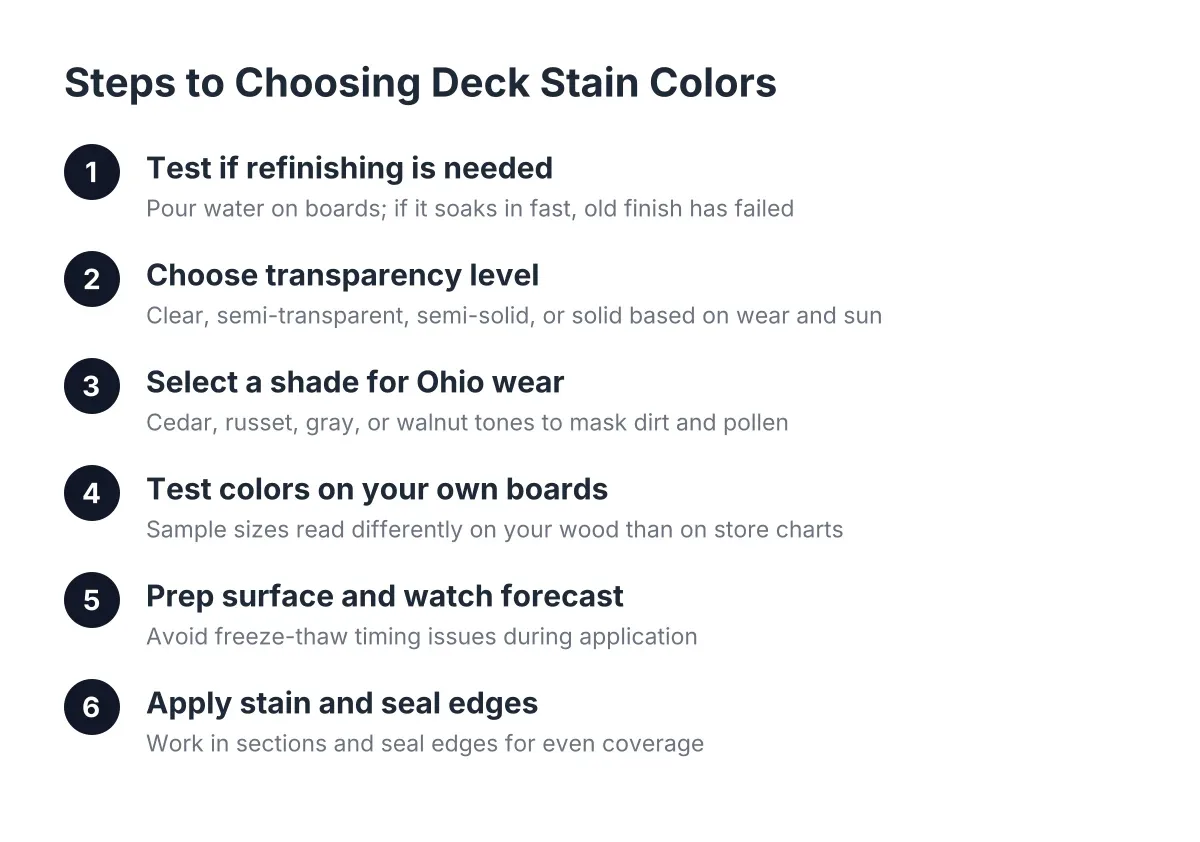
A deck stain is a finish that adds color to wood while protecting it from sun and moisture. Unlike paint, most stains soak into the boards instead of sitting on top, so they wear by fading rather than peeling. The amount of pigment in a stain determines how much of the wood grain you'll still see. When a quote says "stain," ask which opacity level it means, because that changes both the look and the maintenance schedule.
Sealer
A sealer is a clear or lightly tinted coating that blocks water from soaking into deck boards. Sealers protect against moisture but carry little or no pigment, so they offer less sun protection than a stain. Many products sold today combine stain and sealer in one can. If a provider quotes "seal only," your deck will keep its natural look but may gray faster in direct Cincinnati sun.
Transparent Stain
A transparent stain is a finish with just enough pigment to warm the wood's tone while showing all of the grain. It gives the most natural look but the least UV protection, so it needs recoating more often than darker options. It works best on newer wood that still looks good on its own. On an older, blotchy deck, transparent stain will show every flaw.
Semi-Transparent Stain
A semi-transparent stain is a middle-ground finish that adds visible color while still letting the wood grain show through. It's the most common choice for treated wood decking because it balances looks, protection, and upkeep. It hides minor discoloration better than transparent stain without the painted look of a solid. If you're comparing options, our guide to choosing deck staining and sealing in Cincinnati walks through the trade-offs.
Solid Stain
A solid stain is an opaque finish that covers the wood grain completely, like paint, while still letting some texture show. It offers the strongest sun protection and hides stains, old repairs, and mismatched boards. The trade-off is that solid stain forms a film, so when it fails it peels instead of fading, and peeling means stripping before the next coat. Builders often suggest it for older decks with cosmetic damage.
Oil-Based Stain
An oil-based stain is a finish that uses oil as its carrier, letting the pigment soak deep into the wood. Oil-based products penetrate well and tend to fade gracefully rather than peel. They take longer to dry and have stronger fumes than water-based options. Some pros prefer them on dense or older wood where penetration matters most.
Water-Based Stain
A water-based stain is a finish that uses water as its carrier, which means faster dry times, easier cleanup, and lower odor. Modern water-based stains hold color well and resist mildew, and many can go over old oil-based finishes once the surface is prepped. They form more of a surface layer than oil, so prep work matters even more. If a quote specifies water-based, expect a quicker job start-to-finish.
Mildewcide
A mildewcide is an additive in stains and sealers that slows mildew and algae growth on the finished surface. In Ohio's humid summers, shaded decks grow mildew fast, so this additive earns its keep here. Most quality exterior stains include one, but it's worth asking. A deck that stays green and slimy despite cleaning may need a product with stronger mildew resistance.
UV Inhibitors
UV inhibitors are ingredients in a stain or sealer that block sunlight from breaking down the wood's surface. Sun exposure is what turns unprotected wood gray, so UV protection is the main reason stained decks keep their color longer than sealed-only decks. More pigment generally means more UV protection, which is why solid stains outlast transparent ones in full sun. A south-facing deck needs this more than a shaded one.
Deck Staining and Sealing Preparation Practices
Prep is where good deck staining and sealing jobs are won or lost. These terms tell you whether a provider plans to do the job right or just spray and leave.
Pressure Washing
Pressure washing is cleaning deck boards with a machine that sprays water at high pressure to remove dirt, mildew, and loose finish. Done right, it gives stain a clean surface to grip. Done wrong, too much pressure gouges soft wood and raises fuzz that has to be sanded off. A careful provider will mention using moderate pressure or a cleaning solution along with the wash.
Wood Brightener
A wood brightener is a mild acid solution applied after cleaning to restore the wood's natural color and open its pores for stain. Cleaning and stripping can darken wood or leave it dull; brightener reverses that. It also neutralizes leftover stripper so the new stain bonds properly. If a quote includes brightener, that's a sign of thorough prep.
Stripping
Stripping means chemically removing an old stain or sealer that has failed or won't accept a new coat. It's slower and more labor-intensive than cleaning alone, which is why a quote that includes stripping costs more than a simple clean-and-stain. Decks with peeling solid stain usually need it. For a sense of how prep affects the total, see how much deck staining and sealing costs.
Sanding
Sanding is smoothing the deck surface with abrasives to remove raised wood fibers, splinters, and stubborn old finish. Full-deck sanding is a bigger job usually reserved for restorations; spot sanding handles rough patches and splinter-prone rails. Over-sanding can polish the wood so smooth that stain can't penetrate, so pros use coarser grits on decks than on furniture. If your deck has splinters, ask whether sanding is in the quote.
Moisture Content
Moisture content is the amount of water inside the deck boards, usually checked with a handheld meter before staining. Stain applied to wet wood won't penetrate or bond, and it can trap moisture that leads to peeling. After pressure washing, wood needs days of dry weather before it's ready for stain. A provider who mentions checking moisture is telling you they won't rush the job to beat the rain.
Back-Brushing
Back-brushing means working stain into the wood with a brush after it's applied by sprayer or roller. Spraying alone leaves stain sitting on the surface; brushing pushes it into the grain for better penetration and even color. It's slower, which is why some low bids skip it. Ask any provider whether they back-brush, especially on railings and board ends.
Mill Glaze
Mill glaze is a hard, shiny layer on new lumber created by heat and pressure during milling, and it keeps stain from soaking in. It's the reason brand-new decks often shouldn't be stained immediately. Light weathering, a cleaning, or light sanding removes it. If you just built a new deck in greater Cincinnati, your deck builder can tell you when the boards are ready to accept stain.
Results and Warning Signs
Dry Time vs. Cure Time
Dry time is how long before a finish is safe to touch or walk on; cure time is how long before it reaches full hardness and water resistance. Dry time is often hours, while curing can take days or longer depending on weather. Moving furniture or planters back too early can mar an uncured finish. Good providers will tell you both numbers for the specific product they're using.
Peeling and Flaking
Peeling and flaking are failures where a film-forming finish lifts off the wood in sheets or chips. They usually mean the stain went on over wet, dirty, or glazed wood, or that too many coats built up over the years. Fading is normal wear; peeling is a prep problem. A deck that's peeling needs stripping before recoating, which changes the scope of the next job.
Using These Terms
With this deck staining and sealing glossary in hand, you can read a quote line by line and know what each step actually buys you: the cleaning, the brightener, the back-brushing, the product type. You'll also know the right questions, like which opacity the stain is and how moisture gets checked before application. That's usually enough to tell a careful provider from a quick spray-and-go, whether your deck is new treated wood or a twenty-year-old rebuild candidate.
If you need deck building and installation, Cincinnati Deck Pros can help.
Prefer to talk it through? Call (513) 613-3364 — a quick call is usually the fastest way to get a straight answer for your situation.