Choosing Deck Stain Colors That Last Through Cincinnati Freeze-Thaw Winters
Picking deck stain colors in Cincinnati is not the same decision it is in Phoenix or Seattle. Our decks go through freeze-thaw cycles every winter, humid summers, and long stretches of direct sun. A color that looks great on a sample card can fade, peel, or show every scratch within two seasons if the transparency level and pigment load are wrong for this climate. This guide walks you through choosing and applying a stain color step by step, tuned to Ohio weather rather than the generic national advice you will find on a paint store color chart.
This matters most if your deck is older or you are getting a house ready to list. The right stain color can make a 15-year-old pressure-treated deck look cared for instead of tired, and that first impression counts when a buyer or inspector walks the backyard.
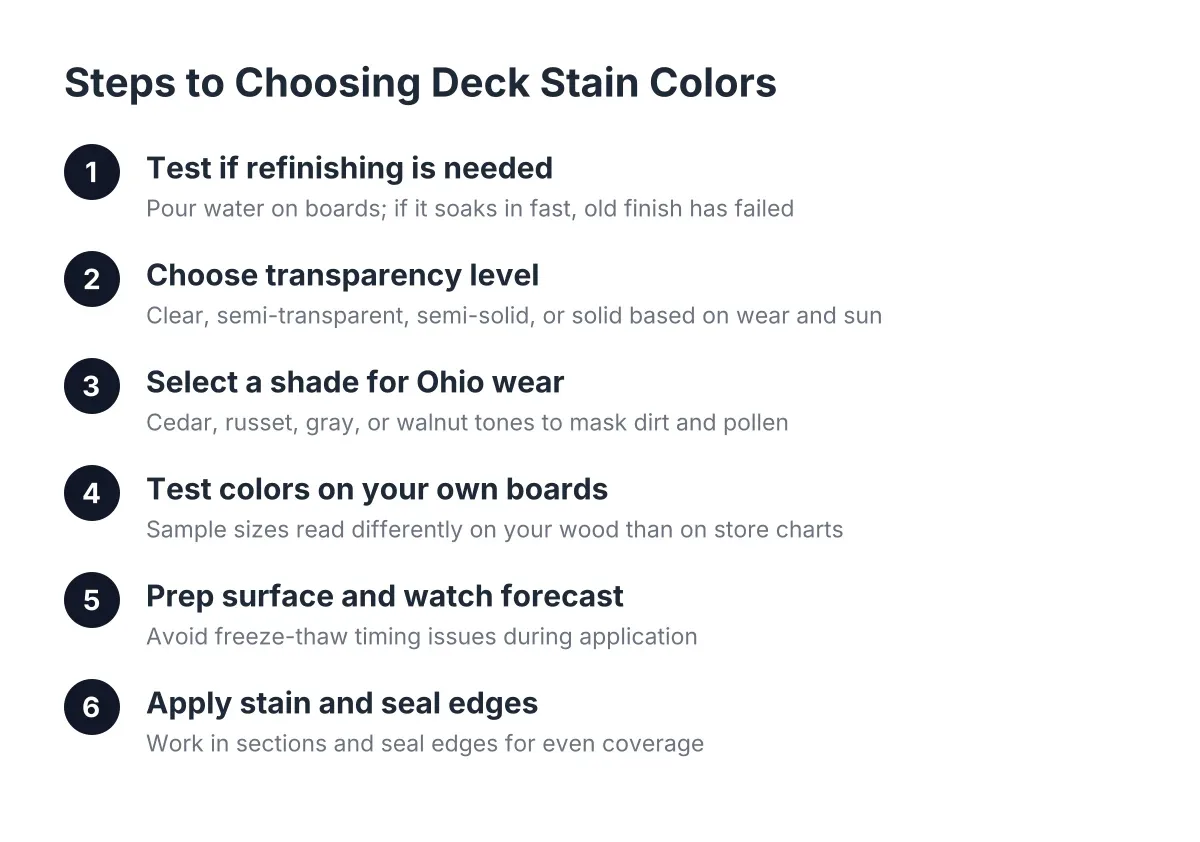
Step 1: Test Whether Your Deck Needs Refinishing at All
Before you think about color, confirm the current finish has failed. Pour a cup of water on a few spots, including high-traffic areas and boards that get full sun. If the water beads up, the old sealer is still working and you can wait a season. If it soaks in within a minute or two, the wood is unprotected and ready for new stain.
In greater Cincinnati, most wood decks need refinishing every two to three years for semi-transparent products, and closer to four or five for solid stains. Freeze-thaw cycles are the reason the schedule here runs shorter than in milder climates. Water gets into unsealed wood, freezes, expands, and opens the grain a little more each winter. Staying on schedule is cheaper than letting boards cup, crack, and rot.
One caution for the older-deck crowd: if boards feel soft or springy underfoot, or the railing wobbles, stop. Stain hides cosmetic wear; it does not fix structural problems. Have a deck contractor look at the framing before you spend a weekend refinishing a deck that may need repair or resurfacing instead.
Step 2: How to Choose Deck Stain Colors for Your Transparency Level
Transparency matters more than the color name on the can. Stain colors come in four levels, and each trades grain visibility for protection:
- Clear sealer: Shows the full wood grain but offers the least UV protection. Best reserved for new cedar or a freshly built deck you want to show off for a season or two.
- Semi-transparent: The sweet spot for most Cincinnati wood decks. Enough pigment to block UV damage, still shows grain, and wears away gradually instead of peeling.
- Semi-solid: More pigment, less grain. Good for decks 10 to 15 years old with uneven coloring you want to even out.
- Solid stain: Covers like paint, hides stains and mismatched replacement boards, and lasts the longest between coats. The trade-off is that it can peel in sheets if moisture gets underneath, and once you go solid, you cannot easily go back to semi-transparent without a deck stain stripper and heavy sanding.
Here is the honest part most color charts skip: pigment is what blocks the sun. The more pigment a stain carries, the longer it protects the wood. On a deck that bakes in full southern exposure all afternoon, even a premium clear or lightly tinted finish will break down faster than its label suggests. If your deck gets sun all day, lean toward semi-transparent or semi-solid regardless of which color family you choose.
Step 3: Selecting Stain Colors That Hide Ohio Wear
With transparency settled, pick the actual shade. The best options for Cincinnati homes tend to sit in the mid-tone range, dark enough to mask dirt and pollen, light enough not to turn the deck into a griddle in July.
- Cedar and warm browns: The safest choice on pressure-treated wood. These tones work with the green or yellow cast that treated lumber carries and complement the brick and stone common on greater Cincinnati homes.
- Russet and redwood tones: Richer and warmer, good for decks shaded by mature trees. In full sun, reds fade faster than browns, so expect a shorter recoat cycle.
- Gray and driftwood: Popular in 2026 and a strong match for composite railing or newer home exteriors. Gray also hides the natural silvering that old wood does on its own, which makes touch-ups less obvious.
- Dark walnut and espresso: Dramatic and good at hiding older boards, but dark colors absorb heat. On a west-facing pool deck, that is a bare-feet problem in August.
Quality matters as much as shade. Water-based stains built with iron oxide pigments and UV absorbers hold color well under direct sun, while an oil based stain for pressure treated wood penetrates deeper and resists freeze-thaw moisture. Both approaches work here; the failure point is usually a bargain product with thin pigment, not the base chemistry.
Match the Stain Color to a Pre-Sale Timeline
Suppose you are listing your house in May and your agent flagged the deck in March. In that scenario, a semi-solid stain in a cedar or medium brown tone is usually the right call. It covers mismatched replacement boards from past deck repair, photographs well in listing photos, and does not require the deck to look perfect underneath. Save the clear and semi-transparent looks for a deck you plan to keep and maintain yourself.
A worthwhile context point: according to the Remodeling Magazine / Zonda Cost vs. Value Report for 2025, a wood deck recoups about 95% of its cost at resale nationally. A well-kept finish is a big part of presenting that value to a buyer.
Step 4: Test Deck Stain Colors on Your Own Boards
Never choose from the chip rack alone. Stain colors from Behr, Sherwin-Williams, or any of the big box lines at Home Depot, Lowe's, or Menards will read differently on your wood than on the sample card, because your boards carry their own undertone, age, and treatment chemicals.
Buy sample sizes of your top two or three choices. Apply each to a two-foot section in an out-of-the-way spot, let it dry fully, then check it at three different times of day. A stain that looks medium brown in morning shade can read orange in late-afternoon sun. Lighting changes the apparent color enough that a single glance is unreliable, so judge the samples over a full sunny day before committing to five gallons.
On pressure-treated wood specifically, confirm the lumber is dry enough to accept stain. New treated boards often need several months of weathering first; stain applied too early beads on the surface and fails within a year.
Step 5: Prep the Surface and Watch the Forecast
Color choice means nothing on a dirty or failing surface. Clean the deck with a wood cleaner or brightener, and strip any peeling solid stain with a deck stain stripper before recoating. Sand rough spots, set popped nails or replace them with screws, and sweep debris out of the board gaps so water can drain.
Timing is where Cincinnati weather dictates the schedule. After washing, the wood needs to dry fully, so plan the project when the forecast shows several consecutive dry, sunny days. Here, that usually means late spring through early fall, with temperatures between about 50 and 85 degrees. Avoid staining in direct midday sun when possible; stain flashes dry on hot boards before it can soak in.
Step 6: Apply Stain in Sections and Seal the Edges
Work board by board, a few boards at a time, keeping a wet edge. Stain that dries in one area and gets overlapped later leaves visible lap marks, especially with semi-transparent stain where every stroke shows. Back-brush as you go and never leave puddles; pooled stain sits on the surface, turns tacky, and never cures into the wood.
Staining a deck with a sprayer speeds up railings and balusters, but always follow the sprayer with a brush or pad to push the product into the grain. In addition, coat the end grain of every cut board. End grain drinks water faster than any other surface, and sealing it is one of the simplest ways to prevent rot at stair treads and border boards.
A rough planning estimate: a typical homeowner can clean one weekend and stain the next, while a professional crew often finishes a standard single-level deck in one to two days once the wood is dry. Larger multi-level deck layouts or heavy stripping jobs take longer.
Step 7: Know When to Call a Deck Contractor Instead
Some situations are worth handing off. Call a pro when:
- Boards flex, feel spongy, or show rot at the fasteners; this is a deck repair or deck resurfacing question, not a staining question.
- The railing moves when you lean on it. Loose railings are a safety issue, and per the International Association of Certified Home Inspectors, as many as 60 percent of America's roughly 45 million decks have safety issues.
- An inspector or realtor flagged the deck before a sale and you are on a listing deadline.
- The deck needs full stripping of an old solid stain; the labor on that job surprises most homeowners.
A professional deck staining and sealing visit typically includes washing, light prep and sanding, stain application, and sealing. Board replacement, railing repair, and full stripping are usually priced as extras, so ask any Cincinnati deck builder to spell out what the quote covers. Two questions worth asking: how long will the wood dry between washing and staining, and what transparency level do they recommend for your sun exposure and why. A contractor who answers both specifically is thinking about your deck, not a generic job.
Choose the right transparency for your sun exposure, test your deck stain colors on your own boards, and schedule the work around a dry stretch of Cincinnati weather. Do those three things and a refinish done in 2026 should carry your deck through several winters of freeze-thaw without peeling. If you would rather have it assessed and handled professionally, or you are not sure whether staining, repair, or resurfacing is the right move, reach out to a local Cincinnati deck contractor for an honest estimate before the season fills up.
If you need deck building and installation, Cincinnati Deck Pros can help.
Prefer to talk it through? Call (513) 613-3364 — a quick call is usually the fastest way to get a straight answer for your situation.