Pool Deck Installation Terms Explained: A Plain-English Glossary
If you're planning a deck around your pool and the quotes read like a foreign language, this pool deck installation glossary is for you. It covers the terms Cincinnati homeowners run into while comparing materials, reading estimates, and talking with a deck builder. Each entry gives you a clear definition first, then explains why the term matters for your project and your budget. Spend a few minutes here and you'll walk into your next contractor conversation knowing exactly what to ask.
- Pool Deck: the walking surface built around a pool
- Coping: the cap along the pool's edge
- Composite Decking: wood-look boards made from plastic and wood fibers
- Treated Wood Decking: lumber treated to resist rot and insects
- Slip Resistance: how grippy a surface stays when wet
- Substructure (Framing): the hidden skeleton under the deck boards
- Footings: the concrete anchors that hold up the frame
- Frost Depth: how deep footings must go to beat winter heave
- Joists: the horizontal boards the decking fastens to
- Ledger Board: the board that ties a deck to the house
- Deck Railing: the barrier around raised deck edges
- Pool Barrier Requirements: safety rules for fencing and gates around pools
- Building Permit: the city or county approval to build
- Setback: the required distance from property lines
- Site Prep: grading and clearing before the build starts
- Fasteners: the screws and clips that hold boards down
- Deck Resurfacing: new boards on an existing sound frame
- Change Order: a written update to the contract mid-project
Materials and Surfaces
These are the terms you'll hear most while picking what your pool deck is made of, and they drive more of your quote than anything else in this pool deck installation glossary.
Understanding Pool Deck Installation Glossary Terms for Materials
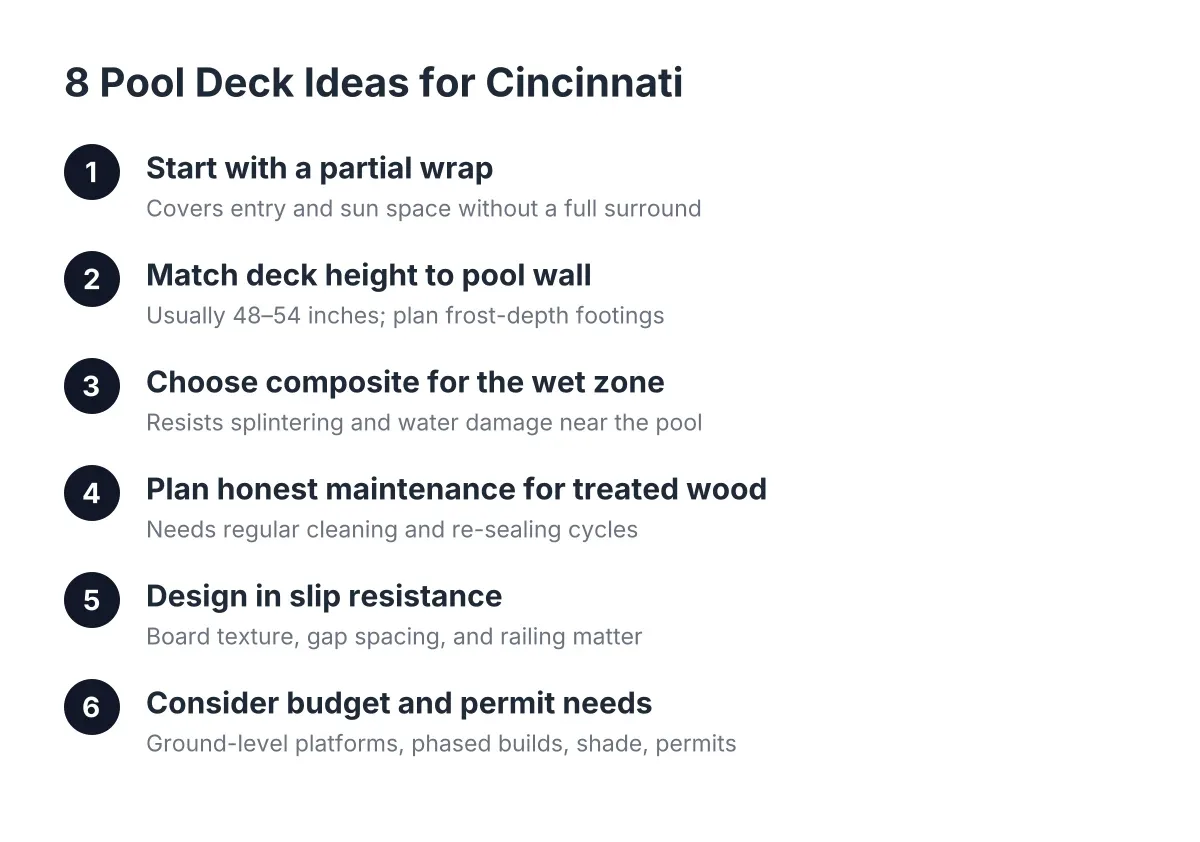
A pool deck is the walking and lounging surface built around a swimming pool, whether that pool sits in the ground or above it. It can be wood, composite, concrete, or pavers, and it handles chairs, foot traffic, and constant splashing. For above-ground pools in greater Cincinnati, a raised wood or composite deck is the common choice because it brings the deck surface level with the pool edge. The material you choose here shapes cost, upkeep, and how the surface feels on bare feet in July. If you want a sense of what drives the numbers, see our guide to pool deck installation cost.
Coping
Coping is the cap or edging that runs along the top edge of a pool wall where the deck meets the water. It covers the pool's structural edge, gives swimmers a smooth surface to grip, and directs splash water away from the frame. On above-ground pool decks, the coping detail is where the deck boards meet the pool rail, and a clean fit here matters. Sloppy coping work lets water sit against framing, which shortens the deck's life.
Composite Decking
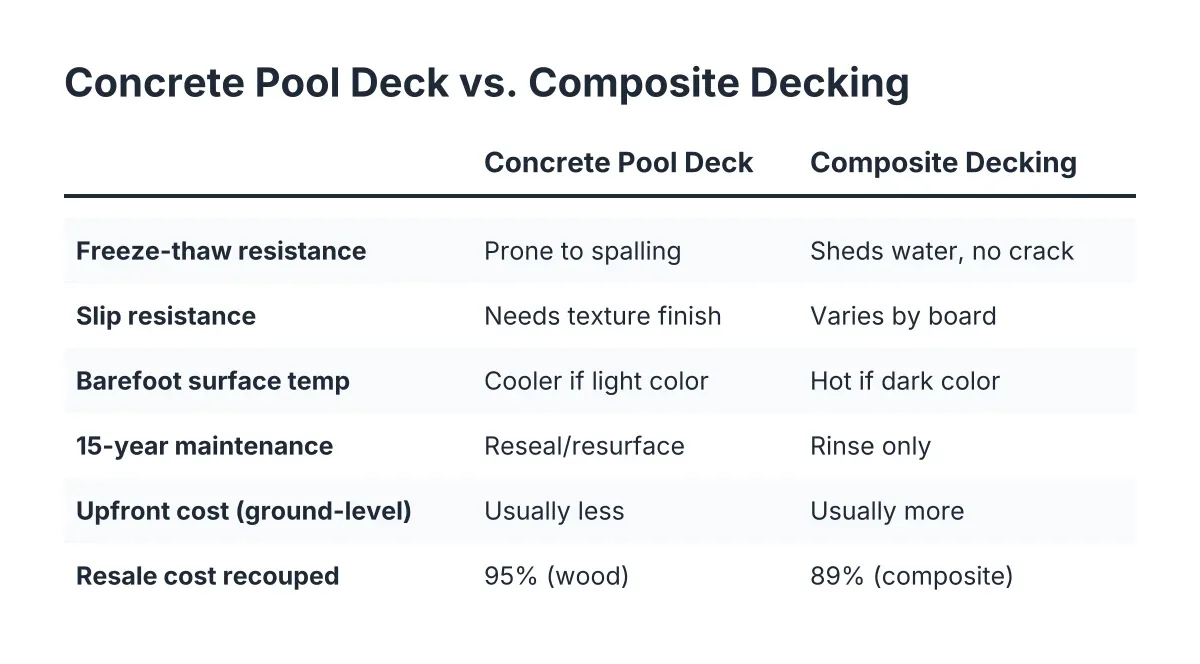
Composite decking is a board made from a blend of recycled plastic and wood fibers, designed to look like wood without the yearly staining. Around a pool it earns its keep: it resists moisture, won't splinter under bare feet, and shrugs off chlorinated splash. Brands like Trex and TimberTech offer textured, fade-resistant lines that hold up well through Ohio's wet springs and freeze-thaw winters. It costs more up front than treated wood decking, but most homeowners spend far less on maintenance over the deck's life.
Treated Wood Decking
Treated wood decking is lumber infused with preservatives under pressure so it resists rot, decay, and insects. It's the budget-friendly starting point for pool decks and still the most common framing material even under composite surfaces. The trade-off is maintenance: near a pool, treated wood needs regular sealing or staining to fight constant moisture. Expect a quote with treated wood to be lower up front but to carry ongoing upkeep your composite neighbor skips.
Slip Resistance
Slip resistance is a measure of how much grip a surface keeps when it's wet. Around a pool, it's a safety spec, not a nice-to-have, because the deck will be wet most of the swim season. Textured composite boards and properly finished wood both offer good traction; smooth, glossy finishes do not. Ask any deck contractor how the surface they're quoting performs wet, and listen for a specific answer about texture or finish.
Structure Under Your Feet
The parts you never see decide how long the deck lasts. These terms explain what's holding everything up.
Pool Deck Installation Glossary: Substructure and Framing Terms
A substructure, or framing, is the skeleton of posts, beams, and joists that supports the deck boards you walk on. Around a pool it lives in a damp environment, so builders typically frame with treated wood even when the surface is composite. A quote that itemizes framing separately from decking is a good sign: it shows the builder is pricing the hidden work honestly. If a bid seems low, the framing spec is often where corners got cut.
Footings
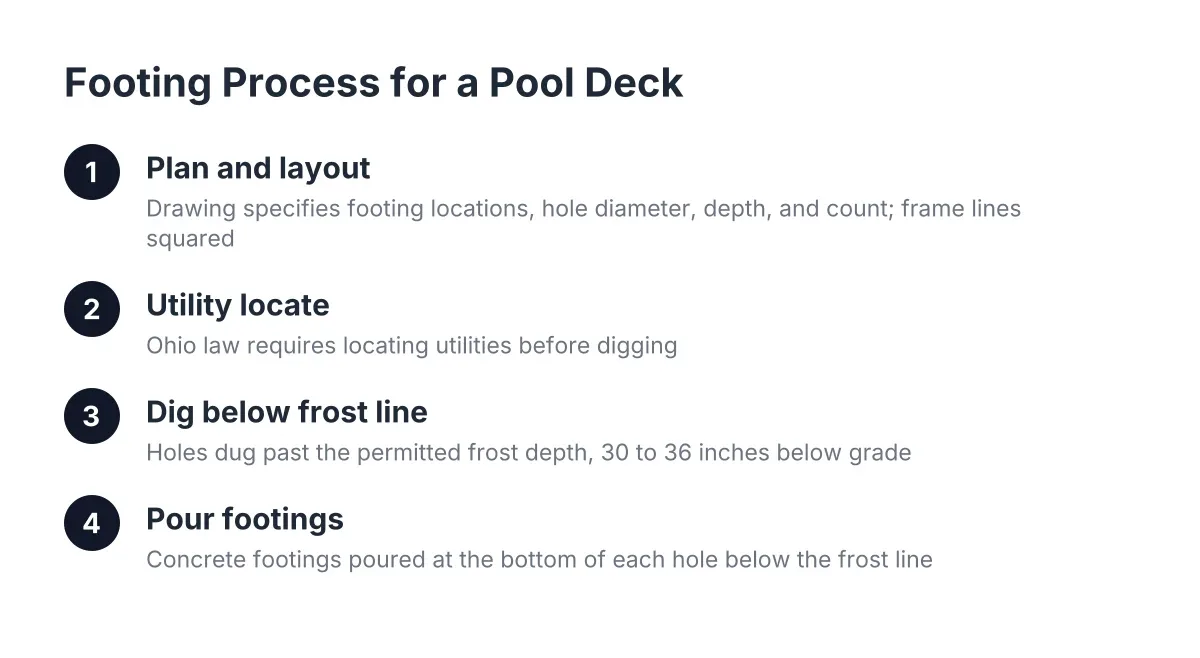
Footings are the concrete anchors set in the ground that carry the deck's weight down to stable soil. Each support post sits on one, and their size and depth depend on the deck's load and your local code. Pool decks carry real weight: people, furniture, and sometimes hot tubs, so footing size matters. A builder who talks about footing depth before talking about board colors has their priorities straight.
Frost Depth
Frost depth is how far down the ground freezes in winter, and footings must reach below it so the deck doesn't heave. In the Cincinnati area, freeze-thaw cycles push and lift anything anchored too shallow, which cracks frames and tilts posts over time. Your city or Hamilton County building department sets the required depth; a local deck builder will know it cold. If an out-of-area bid skips this topic, that's a flag worth raising.
Joists
Joists are the horizontal framing boards, spaced at regular intervals, that the deck boards fasten to. Their spacing depends on the decking material: composite boards usually need joists closer together than wood does. Tighter spacing means more lumber and labor, which is one reason composite deck quotes run higher. If you switch materials mid-planning, expect the joist layout and the price to change with it.
Ledger Board
A ledger board is the framing board bolted to your house that supports one side of an attached deck. It carries serious load, and a bad ledger connection is the most common cause of deck collapses nationwide. Pool decks are often freestanding instead, built on their own posts with no ledger at all, which avoids flashing and attachment issues near a wet zone. Ask whether your design is attached or freestanding; it affects permits, footings, and cost.
Safety, Permits, and Paperwork
Deck Railing
A deck railing is the barrier system of posts, rails, and balusters that runs along the open edges of a raised deck. Building codes require railings once a deck sits above a certain height off the ground, and pool decks for above-ground pools almost always qualify. Railing is priced by the linear foot, so a wraparound pool deck adds up fast. Material choice matters here too: composite and metal railing options cost more than wood but skip the repainting.
Pool Barrier Requirements
Pool barrier requirements are the safety rules that govern fencing, gates, and access around a pool to keep children out when no adult is watching. They often dictate railing height, gate latches that close on their own, and how ladders or stairs reach the deck. Your municipality sets the specifics, so check with your local building department early. A deck contractor who brings up barriers before you do is thinking about your inspection, not just your invoice.
Building Permit
A building permit is the official approval from your city or county that lets construction legally begin, followed by inspections during the build. In greater Cincinnati, pool decks typically need one because they're structural and tied to pool safety rules. Pulling the permit is normally the builder's job; confirm who handles it before you sign. Skipping a permit can stall a future home sale and force expensive rework, so treat "we don't bother with permits" as a dealbreaker. Our pool deck installation service page walks through how the local process works.
Setback
A setback is the minimum distance a structure must sit from your property lines, set by local zoning rules. Pools and pool decks both have setback rules, and in tighter Cincinnati lots they can shrink your buildable area more than you'd expect. HOAs sometimes add their own distance and design rules on top. Measure early, because a deck that violates setbacks may have to be moved or torn out.
Site Prep
Site prep is the grading, clearing, and leveling work done before any footings go in. Around pools it often includes managing drainage so splash and rain flow away from both the pool wall and the deck posts. Sloped yards, buried utilities, or poor soil add site prep hours, and that shows up as a separate line on a detailed quote. If your yard has a grade change, ask how the builder plans to handle it.
Fasteners
Fasteners are the screws, clips, and connectors that hold deck boards to the frame. Near a pool, they must be corrosion-resistant, usually stainless steel or coated screws, because chlorinated water eats cheap hardware. Hidden fastener systems clip boards from below for a clean, screw-free surface, common with composite decking. Hidden systems cost more in labor but leave nothing to snag a bare foot.
Deck Resurfacing
Deck resurfacing means replacing the walking boards and railing on a deck while keeping the existing frame. It's a middle path between repair and full replacement, and it only makes sense if the substructure is still sound. For an aging pool deck with a healthy frame, resurfacing with composite can deliver a new-deck feel at a lower cost than demolition and rebuild. A trustworthy builder will inspect the frame before promising resurfacing will work.
Change Order
A change order is a written amendment to your contract that documents any change in scope, materials, or price after work begins. Maybe you upgrade to composite mid-build, or the crew finds rot that needs fixing. Good builders put every change in writing before doing the work. Verbal "we'll just add that" agreements are where budget disputes are born, so insist on paper.
Using These Terms
With this pool deck installation glossary in hand, you can read a quote line by line and know what the framing, footing, and railing numbers actually cover. You'll also spot the quiet warning signs, like a bid with no permit line or no mention of frost-depth footings. Ask specific questions, compare answers, and you'll choose your builder on substance instead of sales talk.
If you need deck building and installation, Cincinnati Deck Pros can help.
Related guide: pool deck installation — Complete Guide
Prefer to talk it through? Call (513) 613-3364 — a quick call is usually the fastest way to get a straight answer for your situation.