Pressure-Treated Wood vs. Cedar: Durability Through Cincinnati Winters
If your deck is 15 or 20 years old and the boards feel soft underfoot, you are probably weighing what to rebuild it with. The two wood options most homeowners compare are pressure-treated pine and cedar, and deciding between cedar vs treated wood requires understanding how each material actually performs in your climate. Our freeze-thaw winters, humid summers, and clay soil punish decking in ways a national comparison chart never mentions.
This is a straight comparison of the two materials on the things that matter for a rebuild: rot resistance, warping, maintenance, cost, and how each one holds up through real Ohio weather. No pressure toward the more expensive option. Just what a local deck builder would tell you over the phone.
Why This Comparison Matters More After a Deck Fails
If you are rebuilding because the old deck went bad, you already know the stakes. Springy boards, a railing that wobbles when you lean on it, or a home inspector flagging the structure during a sale are all signs the last material choice ran out of life. The North American Deck & Railing Association estimates about 30 million decks in the United States are beyond their useful life and need repair or replacement, so you are far from alone.
The material you pick this time decides how soon you face this problem again. It also decides how much staining, sealing, and board replacement you sign up for in the meantime. For a landlord with several Cincinnati rentals, that maintenance math multiplies across every property. For a homeowner rebuilding the deck you plan to retire on, it decides whether you do this once or twice more.
Pressure-Treated Wood: What It Is and How It Performs
Pressure-treated lumber is usually southern yellow pine that has been infused with copper-based preservatives under pressure. The chemicals resist the two things that killed your old deck: fungal rot and insects. In the Midwest, the pine takes treatment without incising, so boards arrive smooth rather than covered in the small slits you see on West Coast lumber.
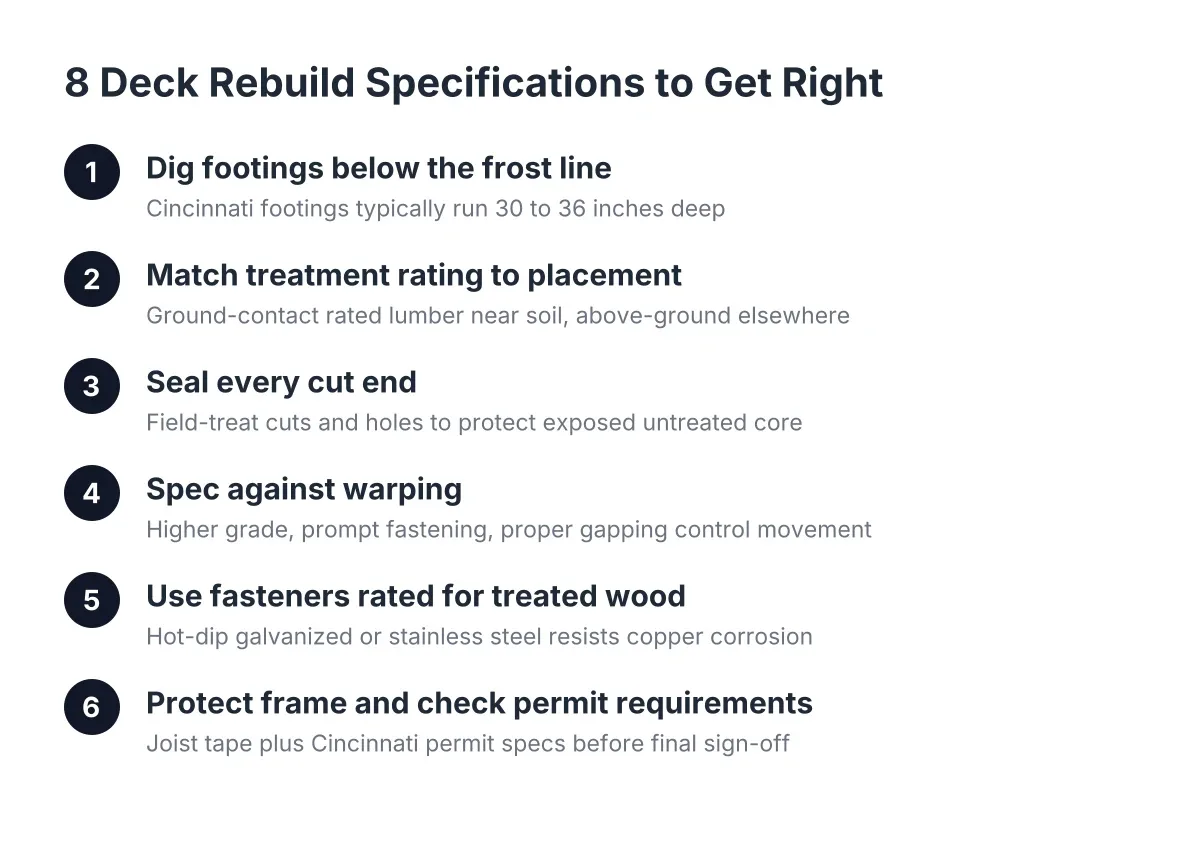
Here is the part most articles skip. The treatment only penetrates the outer shell of a standard board; the core stays untreated. Every cut end and drilled hole exposes raw wood, which is why the American Wood Protection Association calls for field-treating cuts with an end-cut preservative sealer. A builder who skips that step leaves rot a doorway, and it is one reason two decks built the same year can age so differently.
One more honest note. Modern treatment chemistry is gentler than the old arsenic-based formulas, and today's treated lumber generally does not last as long as boards treated 30 years ago. The "severe weather" stamp on the label is not the lifetime promise many homeowners assume it is. Expect a well-built, well-maintained treated deck surface to serve for years, but plan on staining and sealing as a recurring chore, not a one-time job.
Strengths of pressure-treated lumber
- Lowest upfront cost of any decking material, which matters when you are also paying for demolition and new framing
- Strong rot and insect resistance when cuts are sealed and the deck is flashed correctly
- Widely available in every dimension, so repairs down the road are simple
- Structurally proven; nearly every deck frame in greater Cincinnati is treated lumber regardless of what covers it
Weaknesses to plan around
- Wet lumber shrinks and can warp, cup, or twist as it dries, especially boards cut with the heart of the tree near one edge
- Needs cleaning and a fresh coat of stain or sealer every two to three years to keep water out
- Copper preservatives corrode ordinary fasteners; hardware has to be chosen for it
- Greenish color out of the gate; it needs time and stain to look finished
Cedar: Natural Durability and Appearance Trade-Offs
Cedar resists rot naturally through oils in the wood itself, no chemical treatment required. It arrives with a warm reddish tone, weighs less than treated pine, and stays dimensionally stable, meaning it warps and checks less as it dries. On looks alone, cedar wins the day it is installed.
However, cedar's natural rot resistance lives mostly in the heartwood, and the cedar sold at typical lumberyards today contains more sapwood than the old-growth boards that built cedar's reputation. Left unsealed in Cincinnati's climate, cedar grays fast and softens sooner than most homeowners expect. It is also a softer wood, so patio furniture, pet claws, and snow shovels leave marks that treated pine shrugs off.
Cost is the other gap. Cedar decking typically runs meaningfully more per board than treated pine in this market, and for structural posts and joists it is rarely the right call at all. Most cedar decks in Ohio are cedar on top of a pressure-treated frame, because the framing needs the chemical protection where wood meets hardware, hangers, and ground moisture.
Pressure-Treated Wood vs. Cedar Durability in Freeze-Thaw Country
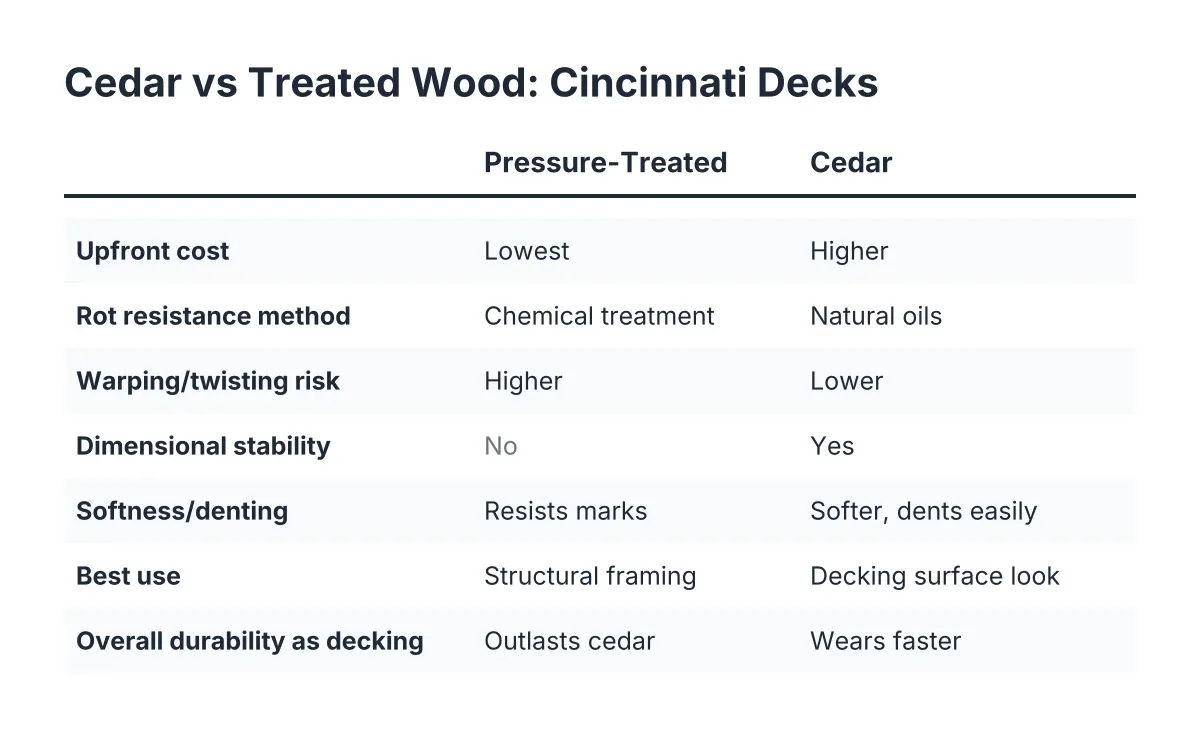
In Cincinnati's climate, pressure-treated wood generally outlasts cedar as a decking surface when both get equal care, and it costs less to reach that point. Cedar holds its shape better and looks better untouched, but its softness and modern sapwood content mean it wears faster on horizontal surfaces that hold snow and standing water.
Freeze-thaw cycling is the reason horizontal boards fail before vertical ones. Water sits on a deck board, soaks into any unsealed grain, freezes, and expands. Over dozens of cycles per winter, that expansion opens checks and splits that let in more water the next season. Treated pine's preservatives fight the rot that follows; cedar relies on oils that deplete as the surface weathers.
Warping cuts the other way. Does treated wood warp? Yes, more than cedar does. Treated boards ship wet from the treatment process, and as they dry in the sun they can cup, bow, or twist. A careful builder culls the worst boards, orients the grain correctly, and fastens promptly to hold boards flat while they dry. Cedar arrives drier and calmer, which is part of what you pay for.
On balance, the pressure-treated wood versus cedar durability question in southwest Ohio comes down to this: treated pine survives the water and rot battle better, cedar survives the shape and appearance battle better, and treated pine wins the overall lifespan contest for the money on a deck surface that faces our winters.
Maintenance Demands, Side by Side
Neither wood is low-maintenance, and anyone who tells you otherwise is selling something. Here is the realistic upkeep picture for each.
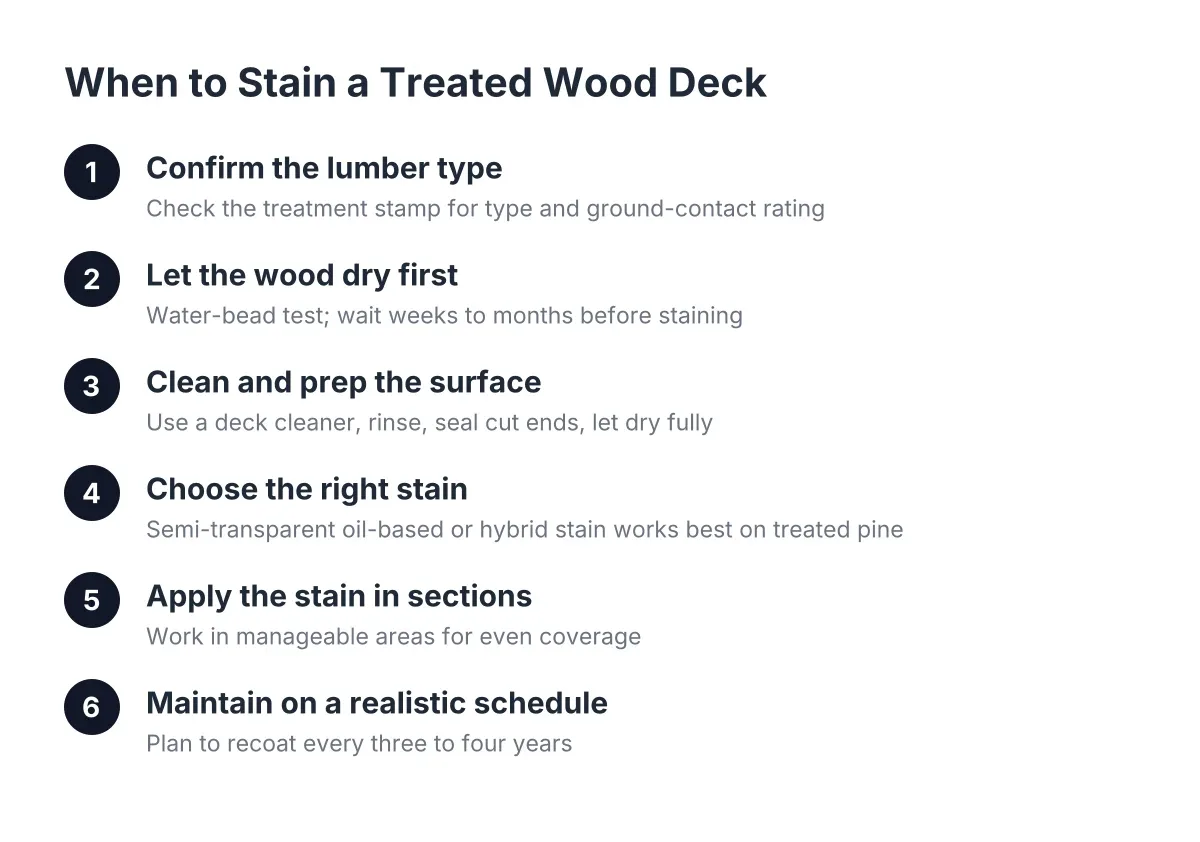
Pressure-treated pine: Let new boards dry for a season, then clean and apply a penetrating stain or sealer. Repeat the clean-and-coat cycle every two to three years. Watch cut ends, board gaps, and anywhere water pools. Yes, you can stain pressure-treated wood, and you should; a solid or semi-transparent stain also fixes the green tint most people dislike. You can paint pressure-treated wood too, but only after it fully dries, and paint on a walking surface tends to peel and demand more upkeep than stain.
Cedar: Seal it early and often, roughly every one to two years, with a UV-blocking product to keep the color. Skip the sealing and cedar goes silver-gray within a couple of seasons; some homeowners like that look, but gray unsealed cedar absorbs water and wears faster. Expect to sand out surface dents and replace soft boards sooner than you would with treated pine.
For a landlord, that difference is the whole decision. Suppose you own three rental doubles in Norwood and Price Hill, each with a back porch deck. Cedar's sealing schedule across three properties is a recurring line item and a recurring tenant-coordination headache. Treated wood decking on those units costs less to install, tolerates a missed maintenance year better, and is easy to spot-repair with lumber from any yard in town.
Cost and Resale: What the Numbers Say
Wood keeps its value at resale better than most upgrades. According to Remodeling Magazine's Cost vs. Value Report, a new pressure-treated wood deck recouped about 83 percent of its cost at resale in 2024, and the 2025 report from Remodeling Magazine and Zonda shows wood decks recouping about 95 percent nationally. Cedar is not broken out separately in those reports, but it sits above treated pine on material cost while returning value in the same wood category.
Beyond resale, there is the living-with-it factor. According to the National Association of Realtors, 81 percent of homeowners say they enjoy their homes more after adding a deck. If you have spent two summers avoiding your own backyard because the boards feel unsafe, that number will not surprise you.
Details That Decide How Long Either Wood Lasts
Material choice matters less than build quality. The same treated board can last a long time or fail early depending on the details underneath it. As of 2026, these are the practices that separate a durable rebuild from a repeat failure in Hamilton County:
- Corrosion-rated hardware. Copper preservatives in treated lumber eat ordinary fasteners. The American Galvanizers Association calls for hot-dip galvanized or stainless steel fasteners, and Simpson Strong-Tie specifies heavier zinc coatings such as its ZMAX line for hangers and connectors in treated wood.
- Sealed cut ends. Every field cut exposes the untreated core. An end-cut preservative on each cut is cheap insurance against the rot that starts inside the board.
- Joist protection. Waterproofing tape over joist tops is an extra moisture measure professional deck builders use even on treated framing, a practice TimberTech describes in its installation guidance.
- The right treatment level. Larger members such as 6×6 posts are often treated to higher preservative retention for ground contact, according to the Journal of Light Construction. Ground-contact lumber belongs anywhere wood sits near soil, and in our clay, footings need to reach below frost depth.
- Board selection. Skip boards with the heart of the tree at one edge; they twist as they dry.
If your current deck is showing soft spots or the railing moves, have someone put eyes on the framing before you settle on surface material. Sometimes the boards are the problem and resurfacing over sound joists makes sense; sometimes the frame is compromised and a partial fix wastes money. That structural call is worth a professional assessment rather than a guess from the yard.
What About Composite Instead of Wood?
Composite decking outperforms both woods on maintenance; it needs occasional cleaning rather than staining or sealing, though it scratches more visibly than wood and costs more upfront. Per the Remodeling 2024 Cost vs. Value Report, a 16-by-20 composite deck averaged $24,206 nationally against $17,615 for the same deck in treated wood.
If low upkeep matters more to you than upfront cost, composite deserves a look, and the TimberTech vs. Trex comparison is its own conversation about texture, color lines, and fastening systems. For a rental property where cost per unit rules, treated wood usually pencils out better. For a forever home where you never want to stain again, composite often does. Either way, the frame underneath will still be pressure-treated lumber.
How to Choose
Pick pressure-treated pine if any of these describe you:
- Budget is the deciding factor, or you are covering demolition and new framing in the same project
- You own rental property and want the cheapest durable surface with easy spot repairs
- You will keep up with a stain-and-seal cycle every two to three years
- You plan to stain the deck a color anyway, so cedar's natural tone buys you nothing
Pick cedar if these fit better:
- Appearance out of the box matters, and you want natural wood tone without waiting for stain
- You will commit to sealing every one to two years without fail
- The deck sees light traffic, so cedar's softness will not show as fast
- The cost premium over treated pine does not change your project math
For most rebuilds in greater Cincinnati, especially rental properties and hard-working family decks, treated pine on a properly detailed treated frame is the practical answer. The durability gap between pressure-treated wood and cedar in our freeze-thaw climate favors the treated board, and the money saved covers the hardware, joist tape, and sealed cuts that actually determine how long the deck lasts. Whichever wood you choose, insist on those details. They are the difference between rebuilding once and rebuilding again in twelve years.
If you need deck building and installation, Cincinnati Deck Pros can help.
Prefer to talk it through? Call (513) 613-3364 — a quick call is usually the fastest way to get a straight answer for your situation.