Treated Wood Decking Terms Explained: A Plain-English Glossary
If you're a Cincinnati homeowner comparing deck quotes, this treated wood decking glossary turns the jargon into plain English. It covers the terms a deck builder, lumber yard, or inspector will throw at you, so you can read an estimate line by line, ask sharper questions, and spot a thin spec before you sign. Each entry starts with a short, standalone definition, then tells you why the term matters to your project and your wallet. Thirty seconds per term, no homework required.
- Pressure-Treated Lumber: wood infused with preservatives
- Ground-Contact Rated: tougher treatment for wood near soil
- Above-Ground Rated: lighter treatment for elevated boards
- Retention Level: how much preservative is in the wood
- Kiln-Dried After Treatment (KDAT): wood dried again after treating
- Incised Lumber: small slits that help treatment soak in
- Joist: the horizontal boards under your deck surface
- Beam: the heavy member that carries the joists
- Ledger Board: where the deck attaches to your house
- Footing: the concrete base below each post
- Frost Depth: how deep footings must go to beat freezing soil
- Flashing: metal or membrane that keeps water out of the ledger
- Joist Tape: a protective strip on top of framing
- Fastener Coating: rust protection on screws and hardware
- Checking: surface cracks as wood dries
- Cupping: boards curling at the edges
- Sealing and Staining: the finish that protects treated wood
- Deck Resurfacing: new boards on an existing frame
Wood and Treatment Terms
Most of the confusion in any treated wood decking glossary starts at the lumber yard, so these terms cover the wood itself and how it's treated.
Pressure-Treated Lumber and Wood Decking Glossary
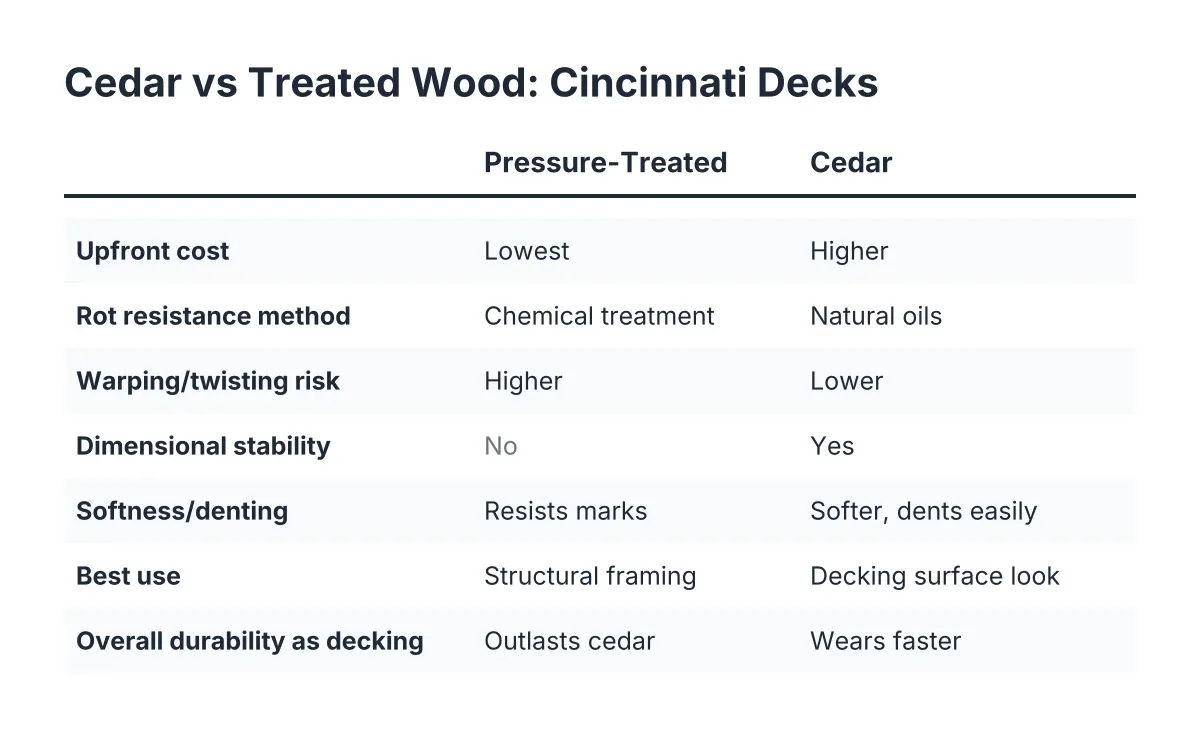
Pressure-treated lumber is wood that has been placed in a sealed tank and infused with preservative chemicals under pressure, so it resists rot, fungus, and insects. It's the workhorse material for deck framing in greater Cincinnati, and often the deck surface too. Because the treatment goes deep into the wood rather than sitting on the surface, treated boards hold up to Ohio's wet springs and freeze-thaw winters far better than bare lumber. If you're weighing it against other woods, our comparison of pressure-treated wood versus cedar through Cincinnati winters walks through the trade-offs.
Ground-Contact Rated
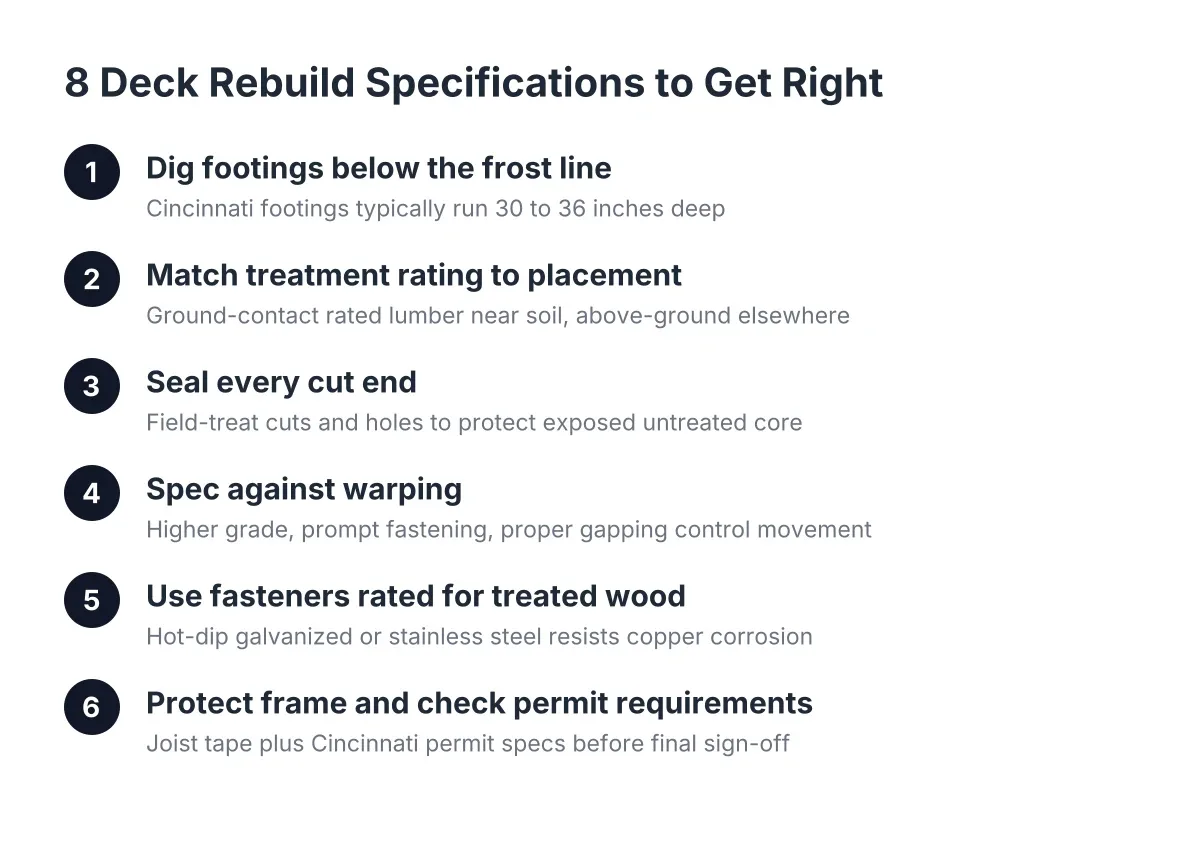
Ground-contact rated means the lumber carries enough preservative to survive touching soil, sitting near grade, or staying damp for long stretches. Posts, the bottoms of stair stringers, and framing close to the ground should all be ground-contact rated. If a quote lists generic treated lumber for posts, ask which rating the deck contractor plans to use. Using the lighter rating in a wet spot is a common shortcut that shortens a deck's life.
Above-Ground Rated
Above-ground rated describes treated lumber with a lighter preservative load, meant for boards that stay elevated, drain freely, and dry out between rains. Deck boards and upper framing on a raised deck usually qualify. It costs less than ground-contact lumber, which is fine when it's used where it belongs. The problem shows up when above-ground boards end up buried in mulch or sitting on a patio slab.
Retention Level
Retention level is the measured amount of preservative left in the wood after treatment, printed on the tag stapled to the end of each board. Higher retention means better protection and a higher rating. You don't need to memorize the numbers; you need to know the tag exists. A careful deck builder matches the retention level to where each piece goes, and our guide to treated wood specifications for Cincinnati decks covers what to check.
Kiln-Dried After Treatment (KDAT)
Kiln-dried after treatment, or KDAT, means the lumber went back into a kiln after treating to remove the moisture the process added. Fresh treated wood is wet and heavy, and it shrinks and moves as it dries on your deck. KDAT boards arrive drier, so they stay straighter and can usually take stain sooner. Expect to pay more for KDAT; whether it's worth it depends on how soon you want a finished look.
Incised Lumber
Incised lumber is treated wood with small slits pressed into its surface before treatment, which help the preservative penetrate dense species. The slits are intentional, not damage. They matter mostly for structural pieces, since the pattern stays visible and some homeowners don't want it on the walking surface. If your quote mentions incised posts, that's a sign the builder is thinking about penetration, not cutting corners.
Framing and Structure Terms
These are the bones of the deck, the parts a quote describes but you'll rarely see once the boards go down.
Joist
A joist is one of the horizontal framing boards that run under the deck surface and support every step you take. Joists are spaced at regular intervals, and that spacing has to match the decking material; composite decking often needs tighter spacing than wood. When you compare quotes, joist size and spacing tell you how solid the deck will feel. A vague quote that skips framing details deserves a follow-up question.
Beam
A beam is the heavy horizontal member that carries the joists and transfers the deck's weight down to the posts. Beams are usually built from two or three treated boards fastened together. Undersized beams are a classic cause of bouncy or sagging decks, which is why a multi-level deck or a large deck and patio combination needs careful beam sizing. If a deck repair estimate mentions beam replacement, the job is structural, not cosmetic.
Ledger Board
A ledger board is the treated board bolted to your house that supports one side of the deck. It's the single most failure-prone connection on an attached deck, because water trapped behind it can rot both the ledger and your home's framing. Proper bolts and flashing at the ledger are non-negotiable. Any deck contractor who talks about ledger attachment and flashing in the first conversation is paying attention to the right things.
Footing
A footing is the concrete base poured below each deck post to spread the load into solid soil. Footings are what keep your deck from sinking or tilting over time. In the Cincinnati area they must extend below the frost depth, which is why you'll see holes deeper than you might expect. Permit inspections often happen at the footing stage, before concrete goes in.
Frost Depth
Frost depth is how far down the ground freezes in winter, and footings must sit below it so freezing soil can't push them upward. Ohio's freeze-thaw cycles make this a real concern, not a technicality; a footing that's too shallow can heave and rack the whole frame. Your local building department sets the required depth, so check your local code or let your deck builder confirm it during permitting. Shallow footings are one of the most common problems found in older decks here.
Protection and Maintenance Terms
Treated wood decking lasts a long time when water is managed well, and this group of terms covers the details that make the difference between a deck that ages gracefully and one that needs early deck repair.
Flashing
Flashing is the metal or membrane barrier installed where the deck meets the house, directing water away from the ledger board and your home's framing. Without it, rainwater seeps behind the ledger and rots wood you can't see. Good flashing costs little compared to the damage it prevents. If a deck resurfacing or rebuild quote includes new flashing, that's a point in the builder's favor.
Joist Tape
Joist tape is a sticky waterproof strip applied to the top edge of joists and beams before the deck boards go on. It seals the screw holes and keeps standing water off the framing, which is where most rot starts. It adds modest cost and meaningful years to the frame. Not every builder includes it, so it's a fair question to ask when comparing quotes.
Fastener Coating
Fastener coating is the corrosion-resistant layer on screws, bolts, and connectors used with treated lumber. The preservatives in treated wood can corrode plain steel, so hardware needs to be hot-dip galvanized, stainless, or rated for treated lumber. Cheap fasteners fail quietly, and a deck is only as strong as its connections. A quote that names the fastener type shows the builder sweats the small stuff.
Checking
Checking means the small surface cracks that appear along the grain as treated wood dries in the sun. Some checking is normal and doesn't weaken the board; it's the wood adjusting to Ohio's humidity swings. Deep splits that run through a board are a different story and worth a repair call. Sealing on schedule slows checking and keeps the surface comfortable underfoot.
Cupping
Cupping is when a deck board curls upward at its edges, forming a shallow trough that holds water. It happens when one face of the board dries faster than the other. Proper board orientation, good spacing, and regular sealing reduce it. Widespread cupping on an older deck often signals it's time to talk about deck resurfacing rather than board-by-board fixes.
Sealing and Staining in Your Treated Wood Decking Glossary
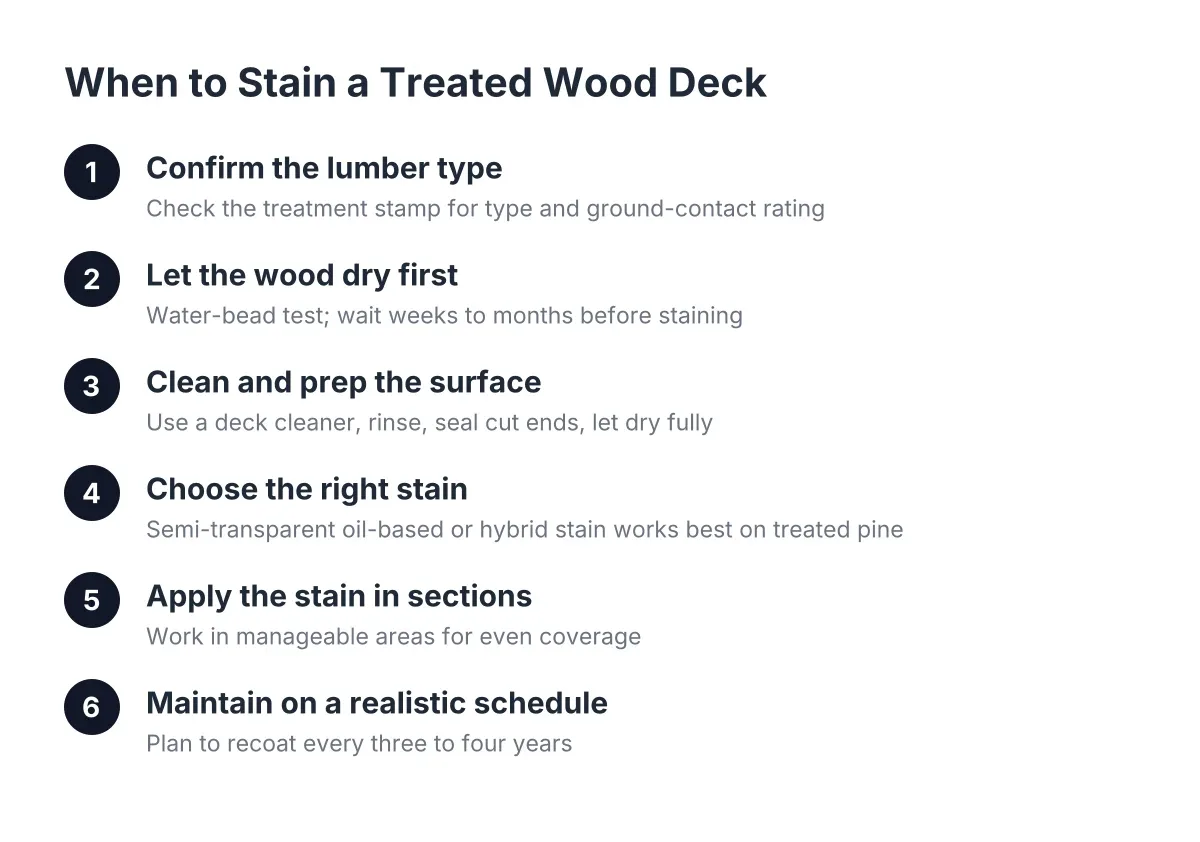
Sealing and staining means applying a protective finish that repels water and slows sun damage on treated wood. Treated lumber resists rot from the inside, but the surface still needs defense against rain and UV. New treated boards must dry before they'll accept a finish, and timing matters; our guide on when to stain pressure-treated wood in Ohio explains how to test for readiness. Plan on refreshing the finish every few years as part of normal upkeep.
Deck Resurfacing
Deck resurfacing is replacing the walking surface and railings of a deck while keeping the existing frame, when that frame is still sound. It costs less than a full demolition and replacement because the footings, posts, and joists stay. The catch is that the frame has to pass inspection; resurfacing over rotted joists wastes money. A trustworthy deck builder will check the structure first and tell you honestly which path makes sense.
Using These Terms
That's the working vocabulary this treated wood decking glossary set out to give you: enough to read a quote line by line and know what each item buys. When a Cincinnati deck builder mentions ground-contact posts, frost-depth footings, or joist tape, you'll know whether the spec is thorough or thin. Ask about the terms a quote leaves out; the gaps tell you as much as the line items.
If you need deck building and installation, Cincinnati Deck Pros can help.
Prefer to talk it through? Call (513) 613-3364 — a quick call is usually the fastest way to get a straight answer for your situation.