Metal vs. Vinyl vs. Wood Deck Railing: How to Choose in Cincinnati
Choosing between a metal, vinyl, or wood deck railing sounds simple until you realize the railing does two jobs at once. It sets the look of your whole outdoor space, and it is the one part of the deck that has to pass a safety inspection. This guide walks through the decision of choosing deck railing material step by step, covering the code requirements most comparison articles skip, how each material handles Cincinnati weather, and when a railing job belongs to a pro. If you are planning a deck-and-patio combo or a multi-level deck, the railing choice matters even more, because it is the element you see from every angle of the yard.
Step 1: Learn the Code Requirements Before You Shop
Start with the rules, not the catalog. Ohio residential decks follow requirements that apply no matter which material you pick, and a beautiful railing that fails inspection gets torn out. Here is what generally applies to residential decks as of 2026:
- Decks more than 30 inches above grade need a guardrail. Measure at the highest point, which matters on Cincinnati's sloped lots where one corner of a deck can sit chest-high while another is near grade.
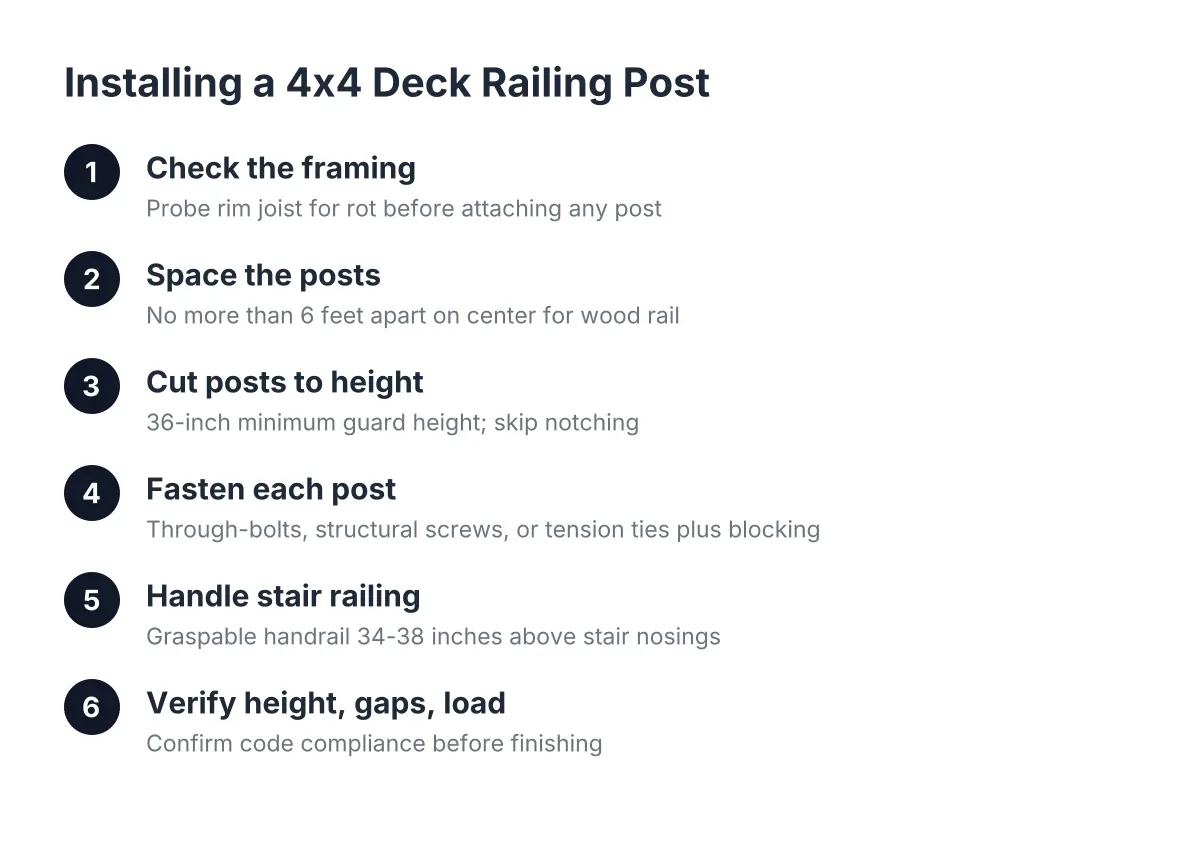
- Residential guardrails are typically required to be at least 36 inches tall, measured from the deck surface to the top of the rail.
- Balusters or infill must be spaced so a 4-inch sphere cannot pass through. This is a child-safety rule, and inspectors check it.
- Stair railings have their own handrail height and graspability requirements, separate from the guardrail rules.
- The railing must resist a concentrated load applied to the top rail. In practice, this means the strength of your deck railing posts and how they attach to the frame matters more than the material between them.
Local rules can vary between Hamilton County and the individual cities and townships around greater Cincinnati, and permits are usually required for new decks and structural railing work. Confirm requirements with your local building department or ask your deck contractor to handle the permit path, which is standard scope for a professional deck railing installation.
Step 2: Choosing Deck Railing Material — Compare Metal, Vinyl, and Wood Options
With the safety floor established, the material decision comes down to maintenance, looks, and budget. Each option earns its place on certain projects.
Wood Deck Railing
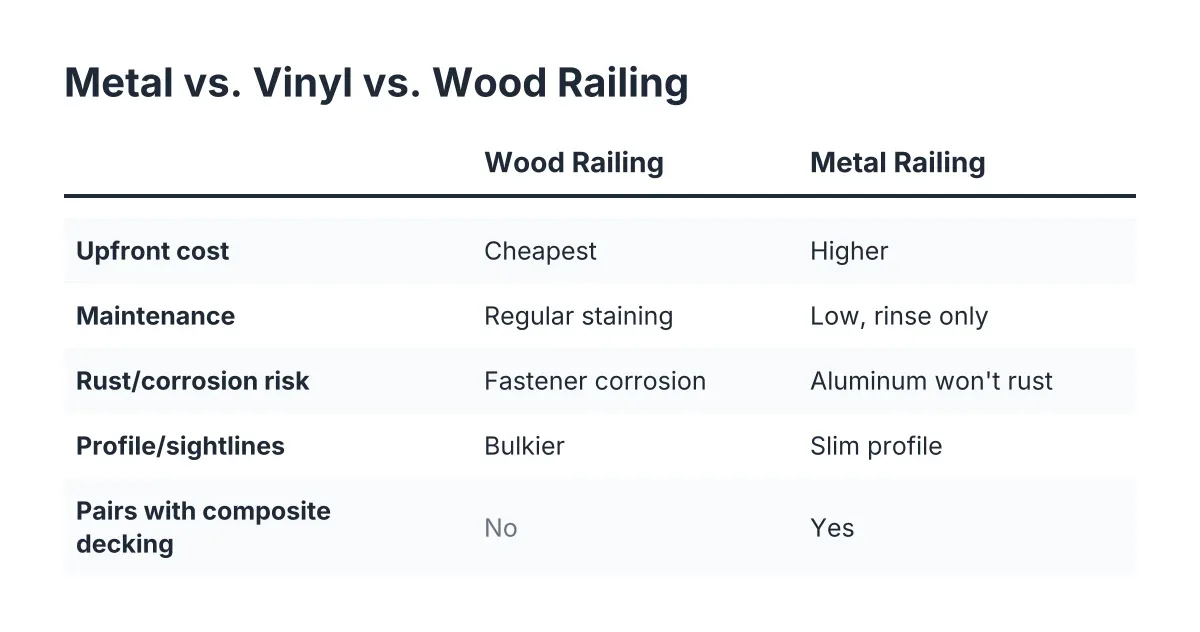
Wood is the traditional choice and the cheapest upfront. A pressure-treated wood deck railing matches a treated wood deck naturally, and cedar steps things up visually. The trade-off is maintenance. In Cincinnati's freeze-thaw climate, wood railings need staining and sealing on a regular cycle or they gray, check, and eventually loosen. Rail caps take the worst of it, because water sits on the flat top surface.
There is also a hardware detail worth knowing. Fasteners driven into pressure-treated lumber should be hot-dip galvanized or stainless steel to resist corrosion from the copper-based treatment chemicals, according to the American Galvanizers Association. Cheap fasteners corrode, and a corroded carriage bolt in a partially rotted post is one of the hardest things to remove on a deck. Crews often have to cut the post away just to get at the bolt.
Metal Deck Railing
Metal deck railing, usually aluminum or steel, delivers a slim profile that keeps sightlines open. That matters if your deck overlooks the yard where the kids play or a patio you built as part of a deck and patio combination. Aluminum will not rust and needs little more than an occasional rinse. Steel is stronger but heavier, and quality varies: powder-coated steel holds its finish for years outdoors, while spray-painted steel can fade noticeably. Ask specifically about powder coating before you buy.
Cable railing for decks falls in this category too. Horizontal stainless cables give the most open view of any code-compliant infill, though cables need proper tensioning and stout end posts to pass the 4-inch sphere rule. Expect to pay more for cable than for standard aluminum balusters. When choosing deck railing material with cable options, understand that this premium infill requires both technical skill and the right structural foundation to install correctly.
Vinyl Deck Railing
Vinyl (PVC) railing is the low-maintenance middle ground. It never needs paint or stain, it wipes clean, and white vinyl pairs well with composite decking like Trex or TimberTech. The downsides are a bulkier profile than metal and a limited color range, mostly whites and tans. In strong summer sun, darker vinyl can also soften slightly, so most manufacturers stick to lighter colors for structural rail components. Many composite decking brands offer matching or coordinating rail lines, which simplifies the choice on a resurfacing or rebuild project.
Step 3: Selecting the Right Deck Railing Material for Your Deck and Climate
Next, think about the pairing, not just the railing in isolation. Metal, vinyl, and wood materials each read differently against different decking:
- A common combination on new builds pairs composite deck boards with black aluminum balusters and a composite top rail, because it balances open views with a warm rail cap you can rest a drink on.
- Treated wood decking with a wood railing keeps costs down and looks cohesive, as long as you commit to the staining schedule.
- Vinyl railing suits screened-in porch conversions and porches on traditional homes, where a painted look fits the architecture.
Cincinnati weather should push your thinking toward durability. Freeze-thaw cycles work fasteners loose over time, and any railing is only as good as the posts and framing behind it. If your deck railing posts sit on framing that has absorbed water for fifteen years, a new railing on old rot is wasted money. This is why railing replacement often gets bundled into a deck resurfacing project: new boards, new railing, existing sound frame.
The market reflects where homeowners are heading. According to Grand View Research, the global composite railing and decking market was valued at 4.7 billion dollars in 2025 and is projected to reach 12.6 billion dollars by 2033. Low-maintenance materials are winning, but that does not make them the right answer for every budget or every house.
Step 4: Decide Between DIY and a Deck Contractor
A homeowner comfortable with tools can handle some railing work safely. Tightening loose connections, replacing a damaged baluster, or restaining a wood rail are reasonable weekend jobs. A loose deck railing fix is often just retightening or upgrading the post-to-frame hardware, provided the wood behind it is still sound.
However, full railing replacement is structural work. The posts must tie into the deck frame with proper blocking and hardware, not just a couple of lag screws into a rim joist. Hangers and connectors used with pressure-treated wood should carry a heavier zinc coating to resist corrosion from the preservative chemicals, according to Simpson Strong-Tie, and that is the kind of detail that separates a railing that passes inspection from one that wobbles in three years. Call a pro now if you see posts that move when you lean on them, soft or discolored wood at the post base, or gaps opening between the railing and the deck. Those are failure signs, not cosmetic issues.
Suppose a homeowner in Anderson Township has a 20-year-old treated wood deck where two corner posts flex under hand pressure. In that scenario, the honest fix is usually not new railing alone. A deck builder would open up the rim joist area first, because flexing posts on a deck that age often trace back to compromised framing. Sometimes the answer is railing replacement; sometimes it is a resurface or a rebuild. A good contractor tells you which before quoting. When you are choosing deck railing material and installation approach, professional guidance during this assessment phase saves money and prevents costly mistakes down the road.
Step 5: Get Quotes and Ask the Right Questions
Finally, compare providers the same way you compared materials. A fair railing quote should spell out the scope: demolition and disposal of the old railing, post attachment method and hardware, the specific product line and finish, stair rail work, and who pulls the permit. Materials drive most of the price spread; wood costs the least upfront, aluminum and vinyl sit in the middle, and cable and premium steel systems cost the most.
Three questions sort serious deck contractors from the rest:
- How will you attach the deck railing posts to the frame, and what blocking or hardware will you add?
- Will this railing meet the guardrail height and infill spacing requirements for my township, and who handles the permit?
- If my framing turns out to be soft where the posts mount, how do you handle that, and how is it priced?
One honest limitation: no article can tell you whether your existing frame will support a new railing. That takes eyes on the structure, and on older decks the answer changes the whole project.
If you are weighing metal, vinyl, and wood options for a new build, a resurfacing project, or an aging deck that needs attention, we can help. We build and rail decks across greater Cincinnati, we know the Hamilton County permit path, and we will give you a straight answer about what your frame can support. Reach out to schedule an estimate.
If you need deck building and installation, Cincinnati Deck Pros can help.
Prefer to talk it through? Call (513) 613-3364 — a quick call is usually the fastest way to get a straight answer for your situation.