Deck Railing Installation Terms Explained: A Plain-English Glossary
If you are pricing a new deck railing in greater Cincinnati, the quotes can read like a foreign language. This deck railing installation glossary breaks down the terms you will hear from a deck builder so you can read an estimate line by line, compare bids fairly, and spot anything that looks off. Each entry starts with a plain definition, then explains why the term matters to your project and your budget. No sales pitch, just the words a first-time buyer actually runs into.
- Baluster: the vertical bars between rails
- Post (Newel Post): the main upright that holds everything up
- Top Rail: the horizontal piece you rest your hand on
- Bottom Rail: the lower horizontal piece holding balusters
- Railing Height: how tall the railing must be by code
- Baluster Spacing (4-Inch Rule): the gap limit between balusters
- Guardrail vs. Handrail: two different jobs, often confused
- Post Mount (Surface Mount vs. Fascia Mount): how posts attach to the deck
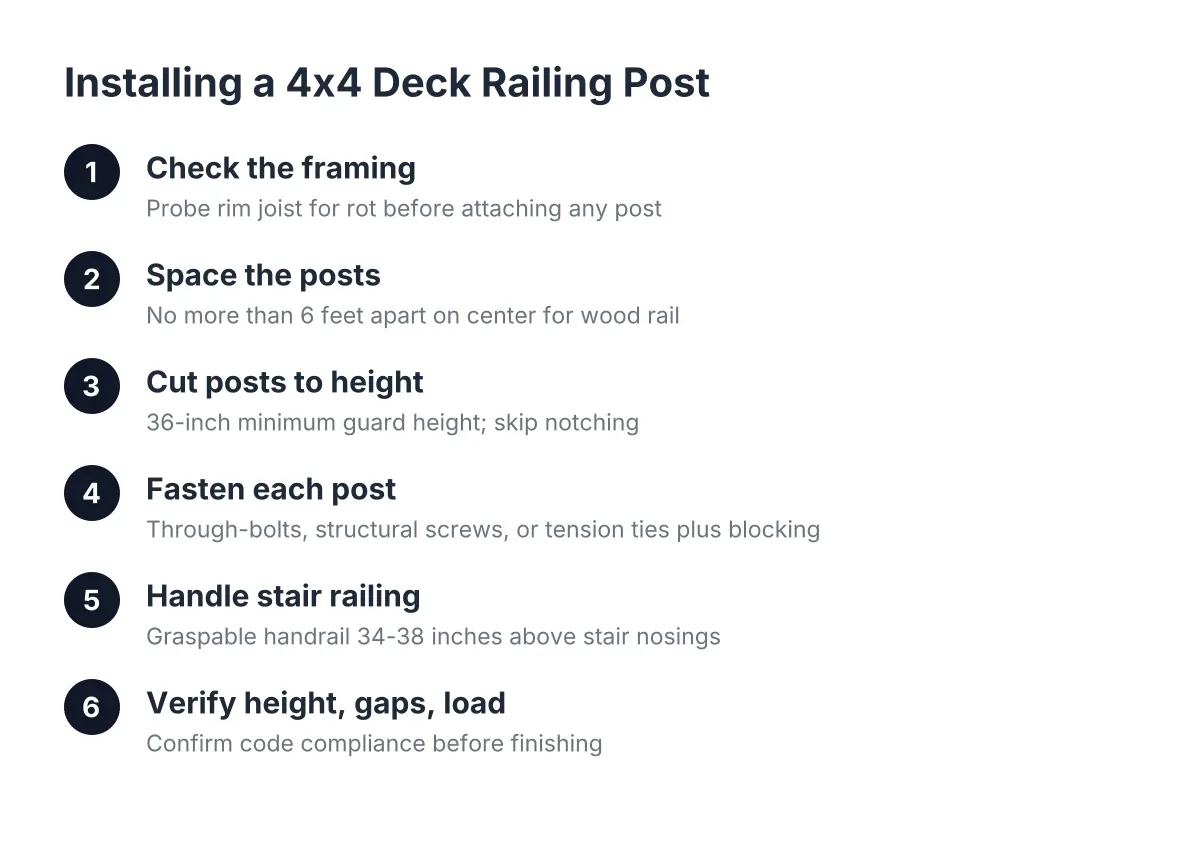
- Blocking: hidden framing that keeps posts solid
- Post Cap: the finished top of a railing post
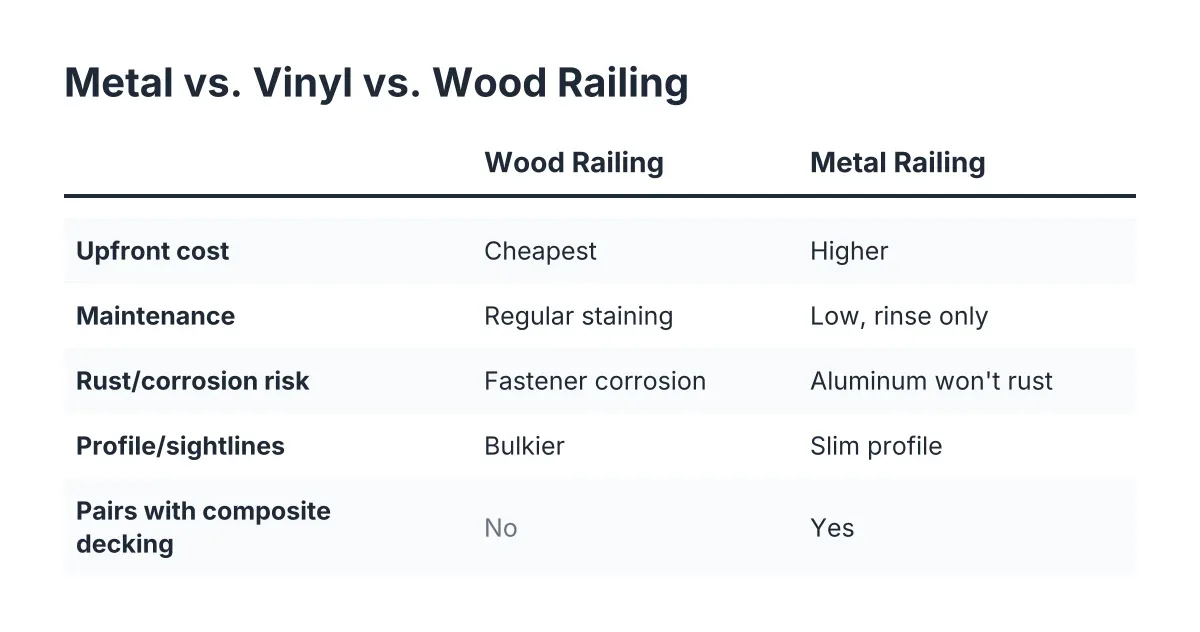
- Composite Railing: low-upkeep railing made from wood-plastic blend
- Cable Railing: thin steel cables instead of balusters
- Aluminum Railing: light metal railing that resists rust
- Treated Wood Railing: pressure-treated lumber built for weather
- Load Rating: how much push a railing must withstand
- Permit and Inspection: the paperwork step before and after the build
- Linear Foot: how railing work gets measured and priced
- Freeze-Thaw Cycle: Ohio weather that loosens railings over time
Railing Parts and Anatomy
Before you can compare quotes, you need the names of the pieces. These first entries in the deck railing installation glossary cover the parts you will see on every drawing and estimate.
Understanding Baluster Definitions in Deck Railing Installation Glossary
A baluster is one of the vertical bars that fill the space between the top and bottom rails of a deck railing. Some contractors call them spindles or pickets; all three words mean the same thing. Balusters do the safety work of keeping kids and pets from slipping through, so their spacing is regulated by code. If a quote lists balusters as a separate line, the contractor is pricing the infill style you chose, and swapping styles can move that line up or down.
Post (Newel Post)
A post, sometimes called a newel post, is the main structural upright that anchors a deck railing to the deck itself. Posts carry nearly all the strength of the railing; the rails and balusters just span between them. When a deck contractor talks about post placement or post count, they are describing how the railing stays rigid when someone leans on it. More posts usually means a sturdier railing and more labor.
Top Rail
A top rail is the horizontal piece that runs along the top of a deck railing, the part you rest your hand or a drink on. It ties the posts together and takes the brunt of leaning loads. Some systems offer a wide, flat top rail called a drink rail, which is a popular upgrade on composite decks. If your quote mentions a specific top rail profile, that choice affects both the look and the price.
Bottom Rail
A bottom rail is the lower horizontal piece of a deck railing that holds the bottom ends of the balusters. It keeps the infill rigid and sits a few inches above the deck surface so water and debris can pass underneath. A sagging bottom rail is a common sign of an aging railing, and a builder may mention foot blocks, small supports under the bottom rail, on longer spans.
Railing Height
Railing height means the vertical distance from the deck surface to the top of the railing, and building codes set a minimum for decks above a certain height off the ground. Residential decks commonly require railing at a set minimum height once the deck floor is high enough above grade; your local building department confirms the exact numbers. If a contractor measures your deck height before quoting, that is a good sign. They are checking whether code requires a guardrail at all, and how tall it must be.
Baluster Spacing (4-Inch Rule)
Baluster spacing is the gap between the vertical bars in a railing, and the common residential standard is that a 4-inch sphere must not pass through any opening. The rule exists to keep small children from getting their heads stuck or slipping through. It applies to the space between balusters, under the bottom rail, and anywhere else an opening exists. If an old railing on your deck has wider gaps, a rebuild will need to meet the current spacing rule, which can change the baluster count and the price.
Guardrail vs. Handrail
A guardrail is the barrier along the edge of a deck that keeps people from falling off, while a handrail is the graspable rail along stairs that you hold for balance. Contractors and inspectors treat them as two different items with different requirements. A deck railing is technically a guardrail; the rail running down your deck stairs is the handrail. If your quote separates the two, that is correct practice, not padding.
Mounting, Structure, and Materials
These terms describe how the railing attaches to your deck and what it is made of. They drive most of the difference between a low bid and a high one.
Key Deck Railing Installation and Mounting Methods
A post mount is the method used to attach a railing post to the deck, either on top of the deck boards (surface mount) or bolted to the outside edge of the frame (fascia mount). Surface mounting keeps posts inside the railing line; fascia mounting frees up floor space on a small deck. Each method needs proper hardware and solid framing behind it. A builder who asks to look under your deck before quoting is checking whether the frame can take the mount you want.
Blocking
Blocking means short pieces of lumber added inside the deck frame to give railing posts something solid to bolt into. You never see blocking once the deck is finished, but it is a big part of why one railing feels rock solid and another wobbles. On older decks, adding blocking is often a hidden labor cost in a railing replacement. If a contractor mentions it, they are planning to do the job right, not inflating the scope.
Post Cap
A post cap is the finished piece that covers the top of a railing post. Caps shed water so the post top does not soak and rot, and they finish the look of the railing. Options range from flat caps to decorative or solar-lighted versions. They are a small line on a quote, but skipping them on wood posts shortens the life of the railing.
Composite Railing
Composite railing is railing made from a blend of wood fibers and plastic that resists rot, splintering, and fading better than bare wood. It pairs naturally with composite decking and needs washing rather than staining. Composite systems usually cost more upfront than treated wood but ask less of you over the years. If you are comparing material options, our guide on deck railing installation cost walks through how each choice affects the total.
Cable Railing
Cable railing is a system that uses thin horizontal stainless steel cables in place of balusters. Homeowners choose it to keep a view open, which matters on decks overlooking a yard or a hillside, common across Cincinnati's hilly neighborhoods. Cables must be tensioned correctly and periodically re-tightened to stay code compliant. It tends to sit at the higher end of railing pricing because of the hardware and labor involved.
Aluminum Railing
Aluminum railing is a factory-finished metal railing that resists rust and needs almost no maintenance. It offers slim balusters, which keep sightlines open, and powder-coated finishes that hold color through Ohio summers and winters. Aluminum works with wood, composite, and multi-level deck builds alike. When a quote lists an aluminum system, expect a higher material line than wood but a lower upkeep burden.
Treated Wood Railing
Treated wood railing is railing built from pressure-treated lumber, which is wood infused with preservatives so it stands up to rain, insects, and ground contact. It is the most budget-friendly railing material and the easiest to customize on site. The trade-off is maintenance; treated wood needs staining and sealing every few years to look good and last. A deck builder quoting treated wood should also talk with you about a finishing plan.
Codes, Paperwork, and Pricing
These are the terms behind the permit line and the final number on your estimate.
Load Rating
A load rating is the amount of force a railing must resist without failing, which building codes define for guardrails and handrails. In plain terms, the railing has to hold firm when an adult leans or falls against it. Inspectors may push on a finished railing to check it. If a contractor mentions load requirements, they are telling you the posts, hardware, and blocking are being sized for safety, not just looks.
Permit and Inspection
A permit is written approval from your local building department to do the work, and an inspection is the follow-up visit where an official confirms the work meets code. In the Cincinnati area, railing work tied to a new deck or a structural rebuild typically runs through the Hamilton County or city permit office, depending on where you live. A reputable deck contractor handles this step or tells you plainly who will. Be cautious with any bid that treats permits as optional on work that clearly needs one.
Linear Foot
A linear foot is a straight-line measurement of length, and it is the standard unit contractors use to price railing. A railing quote priced per linear foot covers materials and labor for each running foot of railing, with posts, stairs, and gates often listed separately. Knowing your deck's perimeter lets you sanity-check the measurement on any bid. For a fuller breakdown of what drives the per-foot number, see how much deck railing installation costs.
Freeze-Thaw Cycle
A freeze-thaw cycle is the repeated freezing and thawing of water in and around building materials, which slowly loosens fasteners, cracks wood, and heaves footings. Greater Cincinnati gets plenty of these cycles every winter, and they are a main reason older wood railings wobble. Materials and hardware chosen with freeze-thaw in mind last longer here. A local builder who brings this up unprompted is thinking about year ten, not just the day the crew leaves.
Using These Terms
With this deck railing installation glossary in hand, you can read a railing quote line by line and know what every item means, from blocking to linear footage. You can also ask sharper questions: how posts will mount, what the baluster spacing will be, and who pulls the permit. Clear questions get clear answers, and that is how good projects start.
If you need deck building and installation, Cincinnati Deck Pros can help.
Related guide: deck railing installation — Complete Guide
Prefer to talk it through? Call (513) 613-3364 — a quick call is usually the fastest way to get a straight answer for your situation.