Deck Repair Terms Explained: A Plain-English Glossary
If you own a deck in greater Cincinnati, sooner or later you will read a repair quote full of words nobody explained. This deck repair glossary translates those terms into plain English so you can read an estimate line by line, talk with a deck contractor without guessing, and spot problems on your own deck before they get expensive. Every definition stands on its own, so skim the index below and jump to whatever word is confusing you right now.
- Joist: the horizontal boards under your deck floor
- Ledger board: where the deck attaches to your house
- Beam: the heavy timber that carries the joists
- Footing: the concrete base below each post
- Frost depth: how deep footings must go to survive Ohio winters
- Post: the vertical support between footing and beam
- Flashing: the metal barrier that keeps water out of the ledger
- Dry rot: wood decay caused by fungus, not dryness
- Deck resurfacing: new boards and railings on the old frame
- Sistering: bolting a new board alongside a damaged one
- Fastener: the screws, nails, and bolts holding everything together
- Joist hanger: the metal bracket that holds each joist in place
- Baluster: the vertical pickets in your deck railing
- Composite decking: boards made from wood fiber and plastic
- Sealant: the coating that blocks water from soaking into wood
- Permit: the local approval many deck repairs require
- Load capacity: how much weight your deck can safely hold
- Inspection: the professional checkup that finds hidden damage
Deck, Repair, and Glossary: Structure and Framing Terms
These are the bones of your deck, and they are where most of the terms in this deck repair glossary come from. When a quote mentions structural work, it means work on one of these parts.
Joist
A joist is one of the horizontal boards that run under your deck floor and hold up the boards you walk on. Joists usually sit 12 to 16 inches apart and carry the weight of everything above them. When a contractor says a joist is soft or rotted, it means the floor above it is losing support. Replacing or reinforcing joists is a structural job, so expect it to cost more than swapping surface boards.
Ledger Board
A ledger board is the long board that attaches your deck to the side of your house. It carries a large share of the deck's weight, and it is the most common failure point in deck collapses. Water sneaking in behind the ledger rots both the board and the house framing it bolts into. If a contractor flags your ledger, take it seriously; it is not a cosmetic issue.
Beam
A beam is the heavy horizontal timber that sits on the posts and carries the joists. Think of it as the backbone of the frame: joists rest on the beam, and the beam rests on the posts. A cracked or sagging beam affects the whole deck, not one spot. Beam replacement usually means temporarily supporting the deck while the old one comes out, which adds labor to the job.
Footing
A footing is the concrete base buried in the ground under each deck post. It spreads the deck's weight so posts do not sink or shift. Undersized or shallow footings are a common reason older decks lean or heave. If an estimate includes new footings, the contractor is rebuilding support from the ground up rather than patching what shows.
Frost Depth
Frost depth is how far down the ground freezes in winter, and footings must sit below that line to stay put. In Ohio, freeze-thaw cycles push shallow footings up and down each year, which racks the frame and loosens connections over time. That movement is why a Cincinnati deck can feel wobbly in spring even though nothing looks broken. A deck builder who asks about your footing depth is checking for this exact problem.
Post
A post is the vertical support that runs from the footing up to the beam. Posts fail most often at the bottom, where they meet concrete or soil and stay damp. A post that sits directly in dirt or in a concrete pocket that traps water will rot from the base up. Modern repairs set posts on metal bases above the footing so water drains away.
Flashing
Flashing is the thin metal or rubberized barrier installed where the deck meets the house to steer water away from the ledger board. Missing or botched flashing lets rain run behind the ledger for years before anyone notices. Many older Cincinnati decks were built with no flashing at all. If a repair quote includes new flashing, the contractor is fixing the cause, not just the symptom.
Damage, Repair, and Glossary Terms for Your Deck
Dry Rot
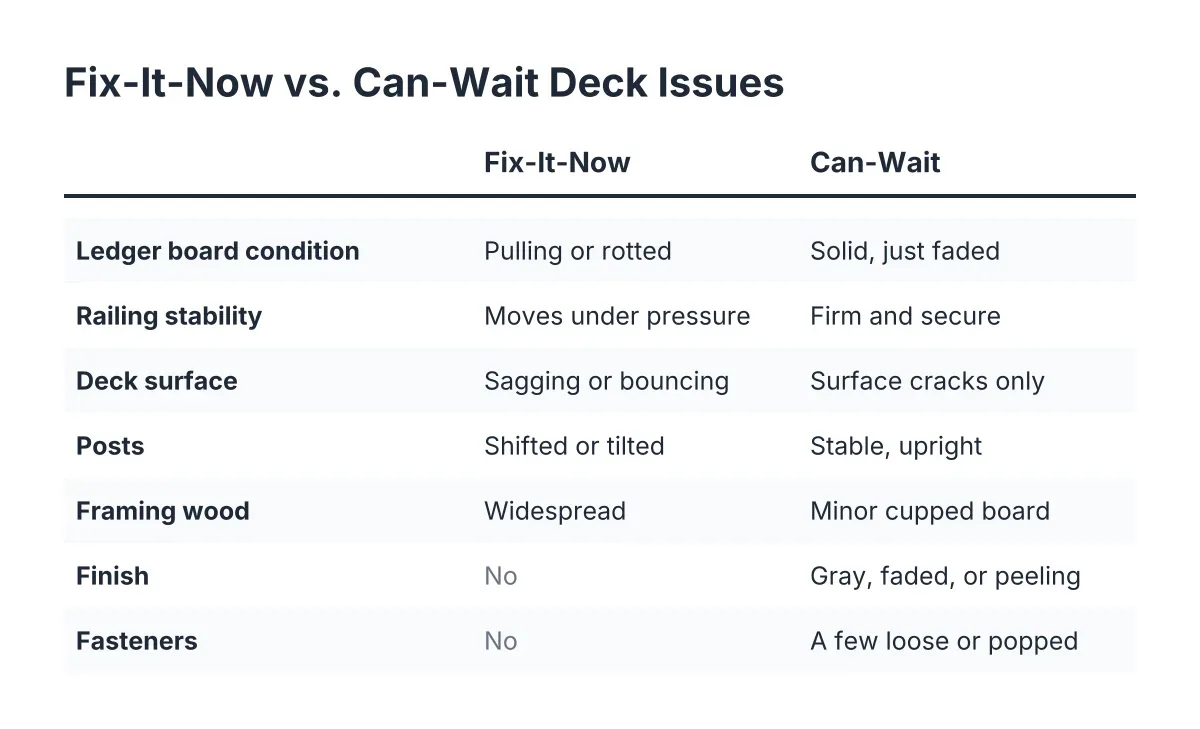
Dry rot is wood decay caused by a fungus that eats the fibers and leaves the board soft, crumbly, or spongy. The name misleads people; the fungus needs moisture to start, then keeps spreading even after the wood dries. Poke a suspect board with a screwdriver: if the tip sinks in easily, the rot has gone deeper than the surface. Rot in deck boards is annoying; rot in joists, beams, or the ledger is structural. The signs that tell you to fix a deck now versus wait mostly come down to where the rot lives.
Deck Resurfacing
Deck resurfacing means removing the walking boards and railings while keeping the original frame, then installing new decking on top. It is the middle option between spot deck repair and full demolition and replacement. Resurfacing only makes sense if the joists, beams, posts, and ledger are still sound, which is why a good contractor inspects the frame before quoting it. Many homeowners resurface with composite decking so the new surface outlasts the treated wood it replaced.
Sistering
Sistering means fastening a new board directly alongside a weakened joist or beam so the two share the load. It is a standard, legitimate fix for a joist that is cracked or partially rotted but still mostly solid. Sistering costs less than full replacement because the old board stays in place. If a quote lists sistered joists, the contractor is reinforcing your frame rather than rebuilding it.
Fastener
A fastener is any screw, nail, bolt, or anchor that holds deck parts together. Outdoor fasteners must be coated or made of stainless steel because treated wood corrodes ordinary hardware. Rusted fasteners are a quiet failure: the boards look fine while the connections weaken underneath. A contractor who talks about upgrading fasteners is addressing safety you cannot see from the surface.
Joist Hanger
A joist hanger is the U-shaped metal bracket that holds the end of a joist against the ledger or beam. Hangers keep joists from pulling loose, and each one needs the right nails in every hole to do its job. Older decks often have joists resting on nails alone, with no hangers at all. Adding proper hangers is a common and worthwhile line item on repair estimates.
Baluster
A baluster is one of the vertical pickets that fill the space between the top and bottom rails of a deck railing. Building codes limit the gap between balusters so a small child cannot slip through; about four inches is the common standard, but check your local code. Loose or missing balusters are one of the cheaper fixes on a deck. A wobbly railing post, on the other hand, is a structural connection problem, not a baluster problem.
Composite Decking
Composite decking is board material made from a blend of wood fibers and plastic, designed to resist rot, splinters, and fading better than wood. It costs more upfront than treated wood decking but skips the regular staining and sealing cycle. Composite goes on the surface only; the frame underneath is still wood, so it still needs sound joists and beams. Homeowners replacing worn boards often weigh composite against wood at resurfacing time.
Sealant
A sealant is a protective liquid coating that soaks into or films over wood to block water absorption. Treated wood resists insects and decay, but it still soaks up rain and swells, cracks, and grays without sealing. In greater Cincinnati, decks take a beating from humid summers and freeze-thaw winters, so staining and sealing on a regular cycle extends a wood deck's life. Sprinkle water on a board: if it soaks in instead of beading, the old sealant is gone.
Pricing, Paperwork, and Process Terms
Permit
A permit is the written approval from your local building department to do structural work on your deck. Cosmetic fixes like swapping a few boards usually do not need one, but ledger, footing, beam, and major railing work often does. In the Cincinnati area, the permit path runs through your city or Hamilton County depending on where you live, so ask your contractor who pulls it. A contractor who volunteers to handle permits is a good sign; one who tells you to skip them is not. Permits and inspections also factor into what deck repairs cost.
Load Capacity
Load capacity is the total weight a deck can safely support, including people, furniture, and snow. Repairs that cut corners, like skipped hangers or undersized sisters, quietly reduce it. Hot tubs, large gatherings, and heavy planters push decks past what an aging frame was built for. If you plan to add weight, say so before the repair quote is written, because the fix may need to be stronger than a like-for-like replacement.
Inspection
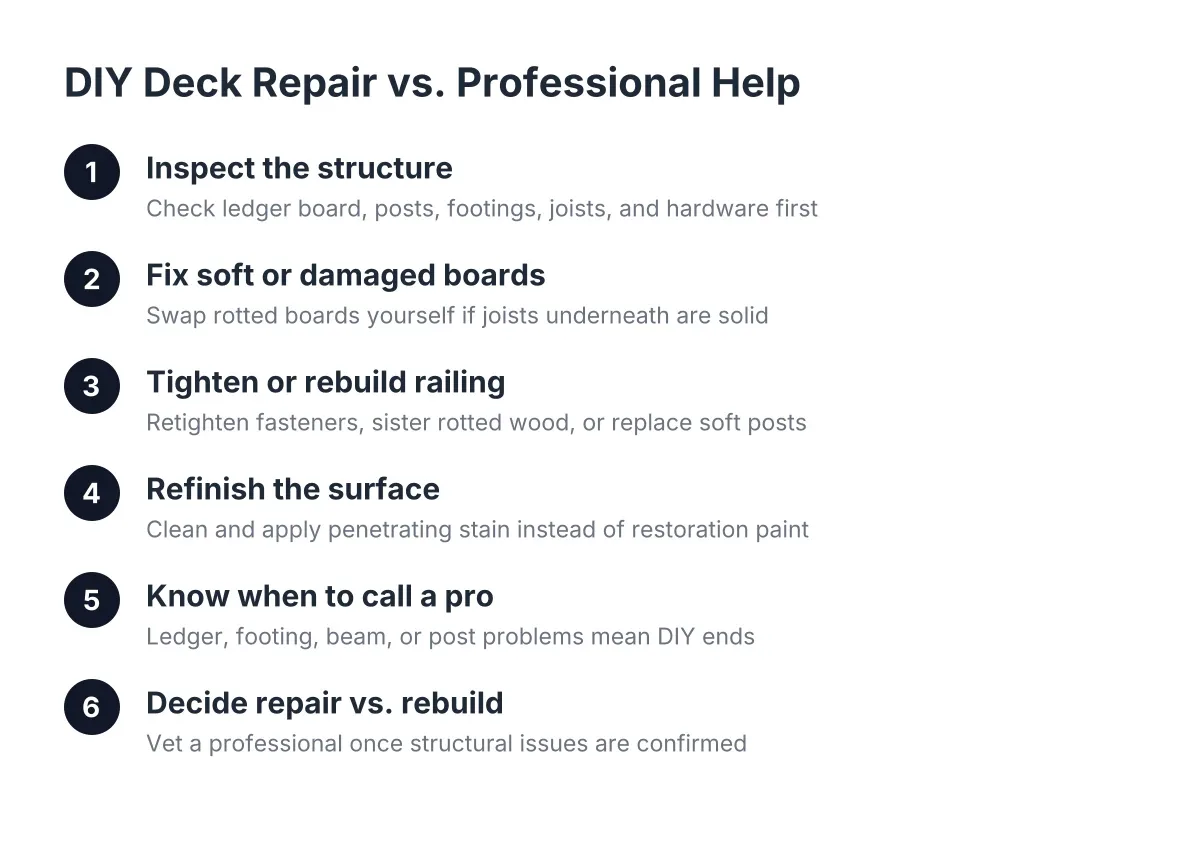
An inspection is a systematic checkup of your deck's structure, connections, and surface, done before repair work is quoted or after permitted work is finished. A pre-quote inspection protects you from paying for surface fixes while hidden rot keeps spreading. It is also the honest answer to the DIY question: some repairs are weekend jobs, and some are not, and an inspection tells you which repairs you can tackle yourself and when to call a builder. Expect a thorough inspector to crawl under the deck, probe the ledger, and check every post base.
Using These Terms
What this deck repair glossary gives you is leverage of the honest kind: you can now read a quote line by line and know whether you are paying for a ledger fix or a baluster swap. When a contractor mentions sistering, flashing, or frost depth, you will know what they mean and what to ask next. That is the difference between hoping a quote is fair and knowing why it is.
If you need deck building and installation, Cincinnati Deck Pros can help.
Prefer to talk it through? Call (513) 613-3364 — a quick call is usually the fastest way to get a straight answer for your situation.