Deck Resurfacer, Sanding, or Stain? 7 Ways to Restore a Worn Deck Surface
If your deck boards look gray, cracked, and tired, you have probably already priced a deck resurfacer at the hardware store and wondered whether a thick coating can buy you a few more years. Sometimes it can. Other times it hides problems that get worse under the paint. This article compares the main surface restoration options, sanding, staining, thick resurfacer coatings, and full board replacement, so you can pick the right one for your deck instead of the one a salesperson pushes hardest.
Here is the honest framework we use as a Cincinnati deck builder: surface treatments fix surface problems. If your framing is solid and your boards are structurally sound, restoration makes sense. If boards are soft, springy, or rotting, no coating will make the deck safe. Keep that rule in mind as you read through the seven options below.
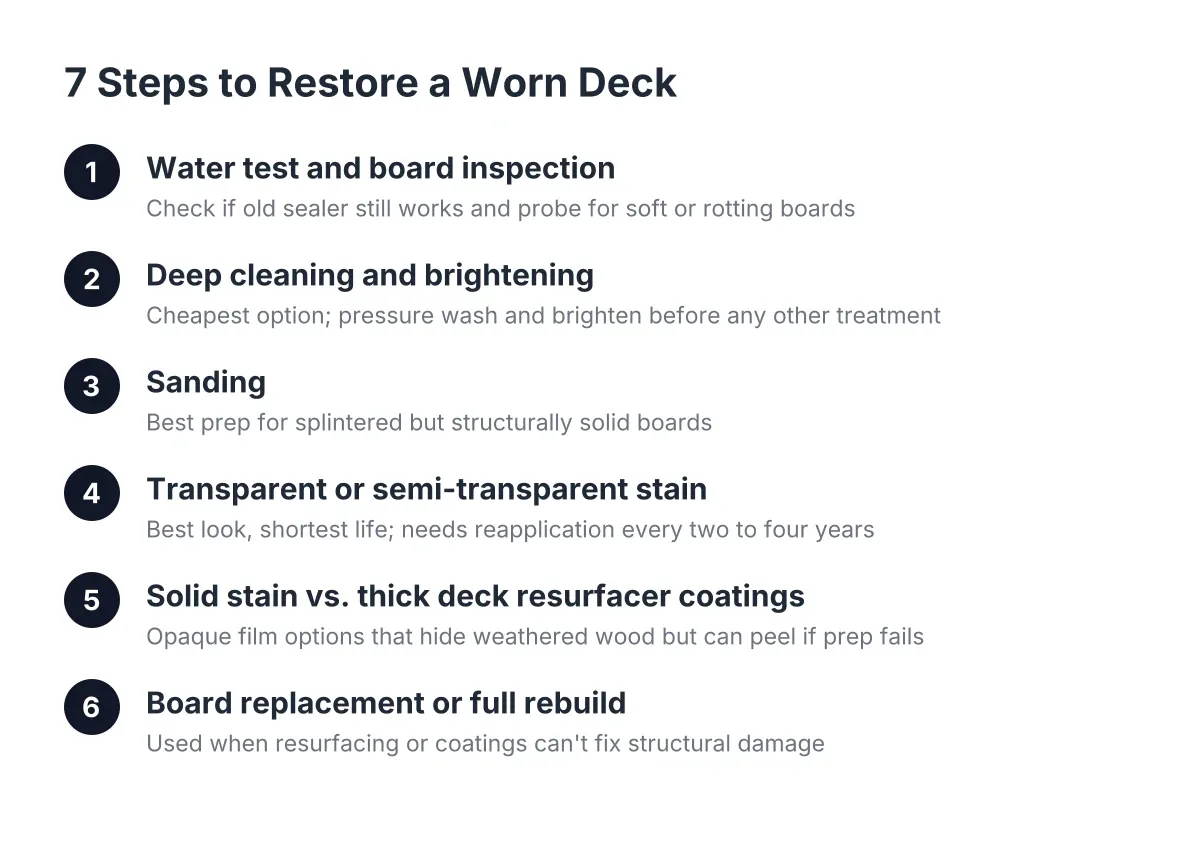
1. Start With the Water Test and a Board Inspection, Not a Product
Before you buy anything, pour a cup of water on a few deck boards. If the water beads up, your old sealer is still working and you may only need a cleaning. If it soaks in immediately, the wood is unprotected and needs refinishing before Cincinnati's freeze-thaw winters drive moisture deep into the boards.
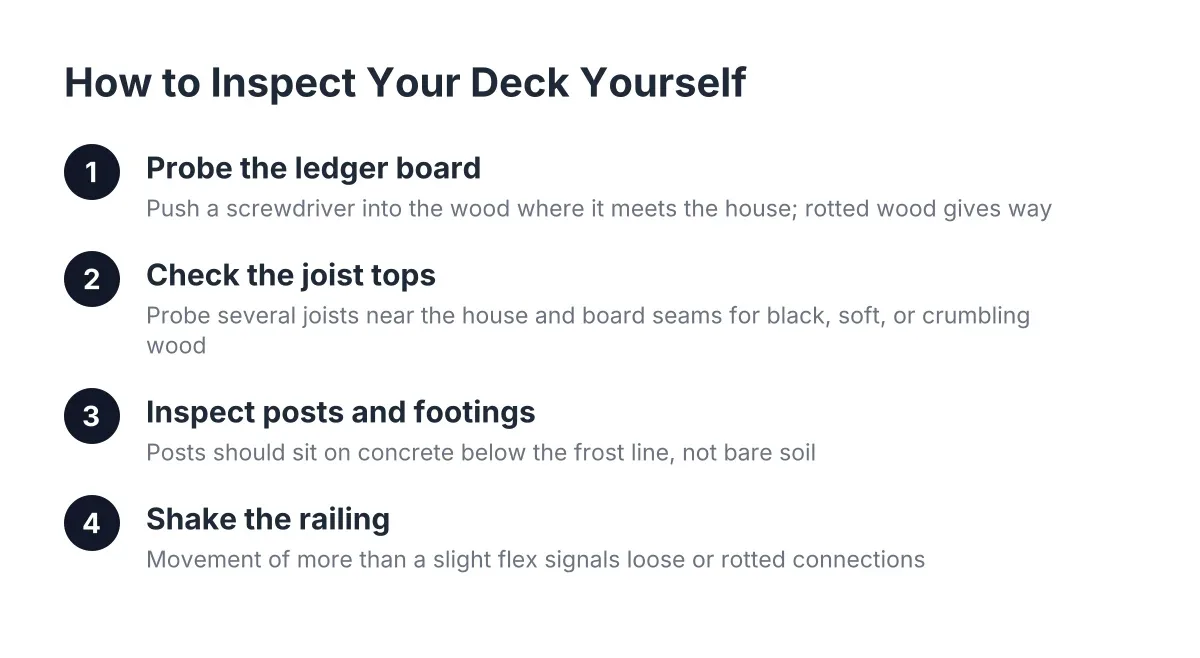
Next, walk the whole deck and press a screwdriver into any dark, soft, or springy spots, especially near the ledger board, stair stringers, and post bases. A deck that is 15 to 20 years old often has hidden rot even when the surface looks passable. This inspection decides everything that follows, because surface products only belong on structurally sound wood.
If you find more than a handful of soft boards, or the framing underneath feels spongy, stop comparing coatings and get a professional assessment. That is a deck resurfacing or rebuild conversation, not a weekend refinishing project.
2. Deep Cleaning and Brightening: The Cheapest Restoration Option
A thorough cleaning is the least expensive way to restore a deck's appearance, and it is required prep for every other option on this list. Pressure washing strips dirt, mildew, and failed finish; when a finish has deteriorated across the whole deck, pressure washing is usually the only practical way to remove it, since hand-sanding an entire deck would take days.
After washing, an all-in-one wood prep and brightener product cleans, brightens, and lifts rust marks or leftover stain before you apply a new finish. Replace any damaged boards before this step, since repairs are easier to make before everything gets wet.
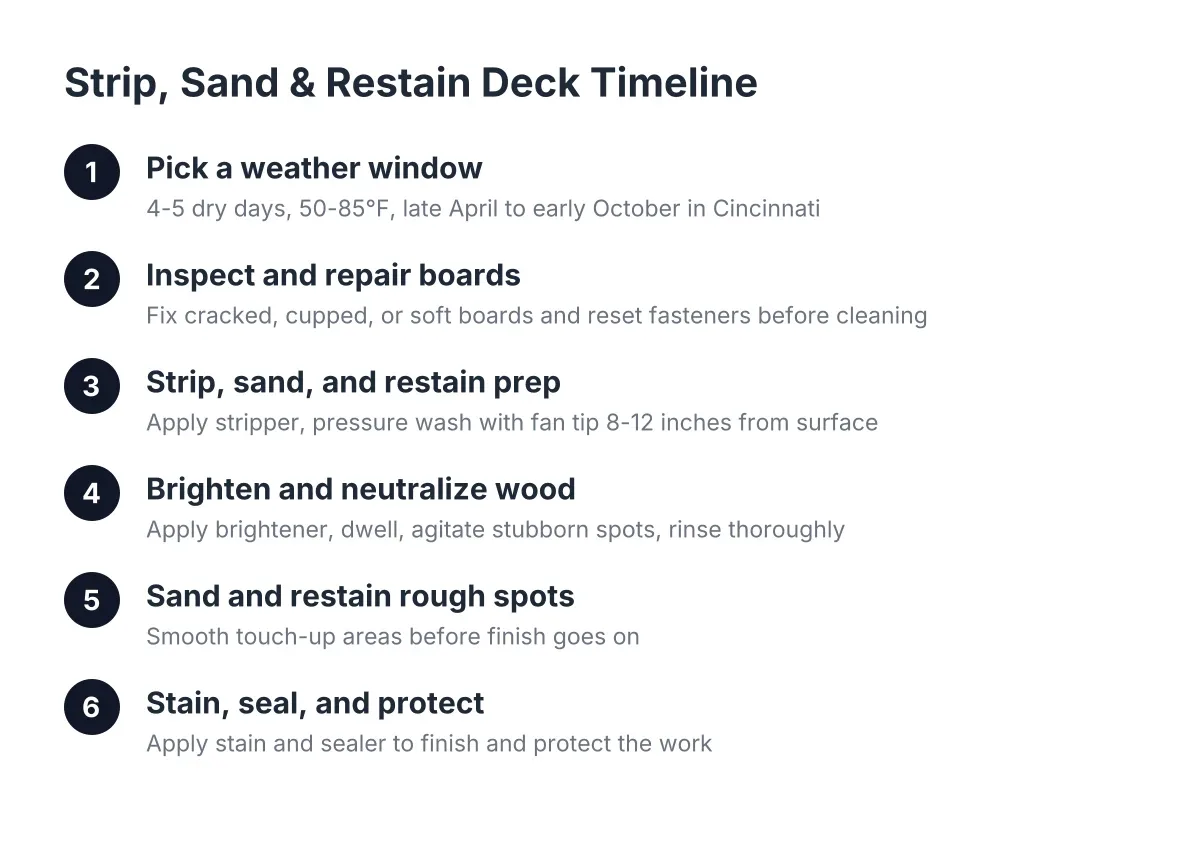
One scheduling note that matters in greater Cincinnati: plan the wash when the forecast shows several dry, sunny days in a row. Wood that has not fully dried will trap moisture under whatever finish you apply next, and the finish will fail early.
3. Sanding: The Right Prep for Splintered but Solid Boards
Sanding removes gray, weathered surface fibers and splinters, exposing fresh wood that takes stain evenly. It is the best choice when boards are structurally sound but rough underfoot, which is common on decks where kids or grandkids go barefoot in summer.
For example, a flat-pad finish sander works better than a drum sander on decks, because the flat pad rides over the slight height differences between individual boards instead of gouging the high ones. Spot-sand around repairs too; a two-part wood filler putty can rebuild small rotted spots, blemishes, or knots in boards that do not need full replacement, then sand the filler smooth before finishing. That is the honest answer to how to repair rotting wood without replacing it: it works for isolated cosmetic spots, never for load-bearing rot.
Sanding is labor, not money, so it suits homeowners with time and a sound deck. It does not fix cupped, cracked, or soft boards; those need replacement.
4. Transparent and Semi-Transparent Stain: Best Look, Shortest Life
Penetrating stains soak into the wood rather than sitting on top, so they show the grain and never peel. On treated wood decking in decent shape, a semi-transparent stain with sealer is the classic choice, and it is what most Cincinnati homeowners picture when they think of deck staining and sealing.
The trade-off is maintenance. Penetrating stains typically need reapplication every two to four years depending on sun exposure, and Ohio's wet springs and freeze-thaw cycles are hard on any finish. Use the water test from item one each spring to know when it is time again.
Choose stain when your boards are sound and you want the deck to look like wood. Skip it if boards are heavily cracked or previously coated with paint or a solid product, because penetrating stain cannot soak through old film.
5. Solid Stain vs. Thick Deck Resurfacer Coatings
Solid stain and thick resurfacer coatings both hide weathered wood, but they behave differently. Solid stain is an opaque, paint-like finish that covers graying and minor discoloration while keeping a thin, flexible film. Thick deck resurfacer paint products, the textured coatings marketed as filling cracks up to a quarter inch, go on ten to twenty times thicker and promise to make old boards look new.
Here is where an honest builder has to level with you. Those thick coatings have a mixed track record on real decks. They rely on perfect prep and dry wood; where moisture gets underneath, the coating can peel in sheets, and removing a failed thick coating is far harder than stripping a failed stain. Many homeowners searching deck resurfacer reviews in 2026 are searching because a coating failed within a few seasons.
Consider a thick coating only when all of the following are true:
- Every board is structurally sound, with no soft spots or movement
- The deck drains well and boards can fully dry between rains
- You accept that this is a cosmetic bridge of a few years, not a fix
- You are prepared for difficult removal if it fails
If any of those are false, solid stain is the safer film, and board replacement is the more durable answer.
6. Board Replacement: Resurfacing the Deck Instead of Coating It
When a coating cannot save the surface, deck resurfacing replaces the walking boards and railing while keeping the existing frame. Each board swap has three phases: remove the old board, rehab the exposed joist, and install the new board. Old boards should not be reused, because years of weathering, cracking, and UV damage leave them structurally weaker than they look.
Joist rehab is the step homeowners miss. A good deck contractor checks each exposed joist for rot and may add waterproofing tape over the joist tops; according to TimberTech, professional deck builders use joist tape as an extra moisture barrier even on pressure-treated framing that already resists rot. That one detail can add years to the frame.
Resurfacing is also the moment to switch materials. Many established homeowners in greater Cincinnati replace worn treated wood decking with composite decking during a resurface, since composite needs only occasional blowing off and hosing down instead of staining every few years. The frame must be sound and correctly spaced for composite, which is exactly what the assessment in item one determines.
7. When No Deck Resurfacer or Board Swap Is Enough: Rebuild
A full rebuild is the right call when the structure itself has failed, no matter how the surface looks. Warning signs include a ledger board pulling away from the house, posts rotted at grade, footings heaved by frost, wobbly framing, or widespread joist rot. In Hamilton County, footings must sit below frost depth, and older decks built on shallow footings often show heaving after hard winters.
Suppose a homeowner in Anderson Township has a 20-year-old deck with faded boards, one loose railing section, and two soft spots near the stairs. If the frame checks out, that deck is a resurfacing candidate at a fraction of rebuild cost. If the same inspection finds the ledger flashing failed and joists rotted along the house, coating or reboarding it would waste money on a structure that has to come down anyway. The scale of the problem is national, not just local; the North American Deck & Railing Association estimates about 30 million decks in the United States are beyond their useful life and need repair or replacement.
There is a consolation on rebuild cost. The 2025 Cost vs. Value Report from Remodeling Magazine and Zonda shows a new wood deck recoups about 95% of its cost at resale nationally, and a composite deck about 89%. A rebuild is an investment, not a loss, especially if a sale is in your future.
How to Get an Honest Quote on Deck Resurfacing and Rebuilding
Searching decking repairs near me returns plenty of names, and online deck repair cost calculators give rough national ranges, but neither tells you which option your specific deck needs. The difference between a fair quote and an upsell comes down to whether the contractor explains what is wrong before naming a number. Any estimate for deck resurfacing and rebuilding should follow an actual inspection of the framing, not a glance at the deck boards.
Ask any deck builder these three questions:
- Did you check the ledger, posts, footings, and joists, and what condition is each in?
- Why does this deck need the option you are recommending instead of the cheaper one?
- What is included in the price, and what would count as an extra, such as joist repairs found after boards come off?
A contractor who answers all three in plain language is treating you like a partner in the decision. One who jumps straight to a rebuild number without showing you the rot has not earned the job. Structural calls are also one place where a professional inspection genuinely matters; a homeowner can handle cleaning, staining, and even some board swaps, but ledger and footing problems put people at risk and deserve trained eyes.
If your Cincinnati deck is showing its age and you are weighing a coating, a resurface, or a full rebuild, have a local deck contractor walk the structure with you and explain what they find. An honest assessment costs you a conversation and can save you from paying for the wrong fix. Reach out to schedule an inspection and get a clear, explained estimate for the option your deck actually needs.
If you need deck building and installation, Cincinnati Deck Pros can help.
Prefer to talk it through? Call (513) 613-3364 — a quick call is usually the fastest way to get a straight answer for your situation.