Deck Resurfacing and Rebuilding Terms Explained: A Plain-English Glossary
If you're getting quotes to fix up an aging deck in greater Cincinnati, the paperwork fills up fast with words like "ledger board," "substructure," and "picture framing." This deck resurfacing and rebuilding glossary translates those terms into plain English so you can read a quote line by line, ask better questions, and spot a problem before it costs you. Each entry starts with a short, standalone definition, then explains why the term matters to you as a homeowner. No sales talk, just the vocabulary a deck contractor actually uses.
- Deck Resurfacing: new boards, same frame
- Deck Rebuilding: tearing out and starting over
- Substructure: the frame under your deck boards
- Ledger Board: where the deck attaches to the house
- Joists: the boards your decking rests on
- Footings: concrete anchors in the ground
- Frost Depth: how deep footings must go
- Decking Boards: the surface you walk on
- Composite Decking: wood-plastic boards, low upkeep
- Treated Wood Decking: pressure-treated lumber, classic choice
- Fasteners: screws and clips holding boards down
- Hidden Fasteners: clips that keep screws out of sight
- Picture Framing: a border board around the deck edge
- Flashing: metal that keeps water off the ledger
- Joist Tape: a protective strip on top of each joist
- Deck Railing: the guard system around the edges
- Building Permit: the city's sign-off on your project
- Deck Inspection: a professional check of the structure
- Demolition and Haul-Away: removing and disposing of the old deck
Resurface or Rebuild: Key Decisions in Deck Resurfacing, Rebuilding, and Glossary Terms
These first terms shape every other line on your quote, so this is where a deck resurfacing and rebuilding glossary has to start. Get these two straight and the rest of the estimate makes sense.
Deck Resurfacing
Deck resurfacing means removing the old deck boards and railing while keeping the existing frame, then installing new surface materials on top. It only works when the frame underneath is still sound, which is why a contractor will crawl under your deck before quoting it. If your boards are gray and splintered but the structure is solid, resurfacing gets you a new-looking deck without the cost of a full rebuild. If you're not sure which camp your deck falls in, this honest guide to resurfacing versus rebuilding walks through the signs.
Understanding Deck Rebuilding and Resurfacing Basics
Deck rebuilding means tearing out the entire deck, frame and all, and constructing a new one from the footings up. It costs more than resurfacing but it is the right call when the frame is rotted, undersized, or pulling away from the house. A rebuild also lets you change the size, shape, or layout, which resurfacing cannot do. Many Cincinnati homeowners comparing the two options start with the question of cost; our deck resurfacing and rebuilding cost guide explains what drives the numbers in each direction.
The Structure Under Your Feet
Most of the money and risk in deck work lives below the boards, in parts you rarely see. These are the terms your contractor uses to describe them, whether the project involves resurfacing or rebuilding.
Substructure
A substructure is the hidden framework of posts, beams, and joists that holds up your deck's walking surface. It carries all the weight, so its condition decides whether you can resurface or must rebuild. New boards on a rotten substructure is money wasted, which is why an honest deck builder inspects it first. When a quote says "frame in good condition," this is the part they checked.
Ledger Board
A ledger board is the horizontal board that attaches the deck to the side of your house. It is one of the most common failure points on older decks, because water sneaking in behind it rots both the ledger and the house framing. A failed ledger is how decks pull away from homes, so take it seriously if a contractor flags yours. Replacing a ledger means opening up that connection, which adds labor to any project.
Joists
Joists are the parallel framing boards, usually spaced 12 to 16 inches apart, that your deck boards screw down to. Their spacing matters when you resurface, because some composite decking requires closer joist spacing than old wood decking did. If your joists are too far apart for the new material, the contractor must add more, and that cost should appear on your quote. Soft or cracked joists are a sign the frame is near the end of its life.
Footings
Footings are the concrete bases set in the ground that support the deck's posts. They keep the whole structure from sinking or shifting over time. On a rebuild, new footings are usually dug and poured; on a resurface, the existing ones stay put. If a contractor mentions "footing problems," expect the conversation to move from resurfacing toward rebuilding.
Frost Depth
Frost depth is how far down the ground freezes in winter, and footings must sit below it so they do not heave. In Ohio, freeze-thaw cycles push shallow footings up and down each year, which racks the frame and loosens connections over time. Your local building department sets the required depth, so check your local code or let your deck contractor handle it. A deck built on footings above frost depth is a common reason older Cincinnati decks sit out of level.
Surface Materials and Finish Details
Decking Boards
Decking boards are the surface boards you actually walk on, laid across the top of the joists. In a resurfacing project, these are the main thing being replaced. Your material choice here, wood or composite, drives most of the difference between quotes. Board width, color, and layout pattern all get specified at this stage.
Composite Decking
Composite decking is a board made from a blend of wood fibers and plastic, designed to resist rot, splinters, and fading. It costs more upfront than wood but skips the staining and sealing cycle, which matters through humid Cincinnati summers and freeze-thaw winters. Most composite boards carry long manufacturer warranties on the material itself. If low maintenance is your goal, this is the category to ask your deck builder about.
Treated Wood Decking
Treated wood decking is lumber infused with preservatives under pressure so it resists rot and insects. It is the most affordable common decking material and the traditional choice for Midwest decks. The trade-off is upkeep: treated wood needs periodic staining and sealing to keep moisture out and the color even. It is a sensible pick when budget leads and you do not mind the maintenance.
Fasteners
Fasteners are the screws, clips, or nails that hold decking boards to the joists. They sound minor, but the wrong fastener in the wrong material causes popped boards, stains, and squeaks. Composite decking usually requires specific fasteners approved by the board manufacturer. A quote that names the fastener type is a sign the contractor sweats details.
Hidden Fasteners
Hidden fasteners are clips installed between deck boards so no screw heads show on the surface. They give the deck a clean, furniture-like look and remove the small water-collecting holes that surface screws create. They add some labor cost, so you will see them as a line item or an option on composite decking quotes. Ask to see both looks before you decide.
Picture Framing
Picture framing is a design detail where a border board runs around the outside edge of the deck, framing the field boards like a picture. It hides the cut ends of boards and gives the deck a finished, custom look. It requires extra framing underneath to support the border, so it adds cost. Additionally, it is one of the most requested upgrades on composite resurfacing projects.
Flashing
Flashing is the metal or waterproof membrane installed over the ledger board to direct water away from the house connection. Missing or failed flashing is the usual culprit behind rotted ledgers. Any resurfacing or rebuilding project should include checking or replacing the flashing while that area is open. If your quote does not mention it, ask.
Joist Tape
Joist tape is a sticky waterproof strip applied to the top edge of each joist before new boards go down. It seals the screw holes where water would otherwise soak into the frame, which extends the life of the substructure. It is a small cost that protects the most expensive part of the deck. Contractors who include it by default tend to think long term.
Paperwork, Inspections, and Teardown
Deck Railing
A deck railing is the guard system of posts, rails, and balusters around the edges of a deck. Building codes require railings on decks above a certain height, so your contractor will confirm whether yours needs one. Railings are usually replaced during resurfacing, since old wood railings rarely match new boards. Material options range from matching wood to composite, metal, and cable styles.
Building Permit
A building permit is official approval from your local building department to do structural work on your property. Rebuilds almost always require one, and some resurfacing projects do too, depending on what structural work gets touched. In the Cincinnati area, the permit path runs through your city or Hamilton County, and a local deck contractor typically handles the application. Skipping a required permit can bite you at resale, so ask any bidder how they handle it.
Deck Inspection
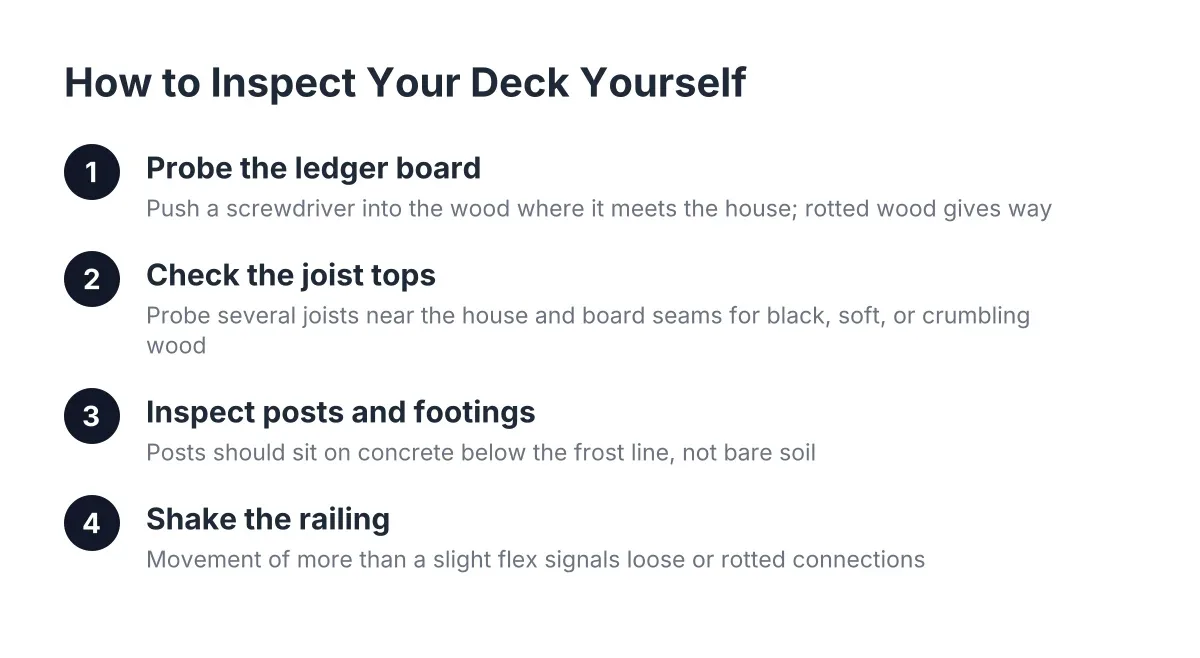
A deck inspection is a hands-on check of the frame, connections, footings, and surface to judge the deck's condition. It is the step that honestly answers "resurface or rebuild," so it should happen before anyone quotes you a number. Expect the inspector to probe for soft wood, check the ledger and flashing, and look at how posts meet footings. A contractor who quotes without looking underneath is guessing.
Demolition and Haul-Away
Demolition and haul-away means tearing out the old deck materials and disposing of them, including dump fees. On a rebuild it covers the whole structure; on a resurface it covers the old boards and railing. It is a real line item, so check whether your quote includes it or leaves disposal to you. Old treated lumber cannot be burned, so proper disposal matters.
Using These Terms
With this deck resurfacing and rebuilding glossary in hand, you can read a quote line by line and know what each item buys you. You can also ask the questions that separate careful bidders from fast ones: How is the frame? Who pulls the permit? Is the flashing included? The right deck builder will welcome every one of them.
If you need deck building and installation, Cincinnati Deck Pros can help.
Related guide: deck resurfacing and rebuilding — Complete Guide
Prefer to talk it through? Call (513) 613-3364 — a quick call is usually the fastest way to get a straight answer for your situation.