Deck Demolition and Replacement Terms Explained: A Plain-English Glossary
If you're getting quotes to tear out an old deck and build a new one, the paperwork fills up fast with trade terms nobody explains. This deck demolition and replacement glossary breaks down the words Cincinnati homeowners actually run into, in plain English. Use it to read a quote line by line, ask a deck contractor sharper questions, and spot gaps in scope before you sign anything. Each entry takes less than thirty seconds to read.
- Demolition (Demo): tearing the old deck out
- Tear-Off: full removal down to bare ground
- Haul-Away and Disposal: getting the debris off your property
- Ledger Board: where the deck attaches to your house
- Footings: the concrete the deck stands on
- Frost Depth: how deep footings must go in Ohio
- Framing (Substructure): the skeleton under the deck boards
- Joists: the boards that hold up the decking
- Decking (Deck Boards): the surface you walk on
- Composite Decking: wood-look boards made from wood fiber and plastic
- Treated Wood Decking: lumber treated to resist rot
- Deck Resurfacing: new boards on the old frame
- Flashing: the metal barrier that keeps water out of your house
- Railing System: posts, rails, and balusters around the deck edge
- Demolition Permit: the city's sign-off to remove a structure
- Building Permit: the city's sign-off to build the new deck
- Setback: how close to the property line you can build
- Scope of Work: the written list of what the contractor will do
- Change Order: a written update when the plan changes mid-project
Understanding Deck Demolition and Replacement Glossary Terms
The front half of any deck demolition and replacement glossary starts with the teardown, because that is where quotes differ the most. Two bids can look similar until you check what each one includes for removal and disposal.
Demolition (Demo)
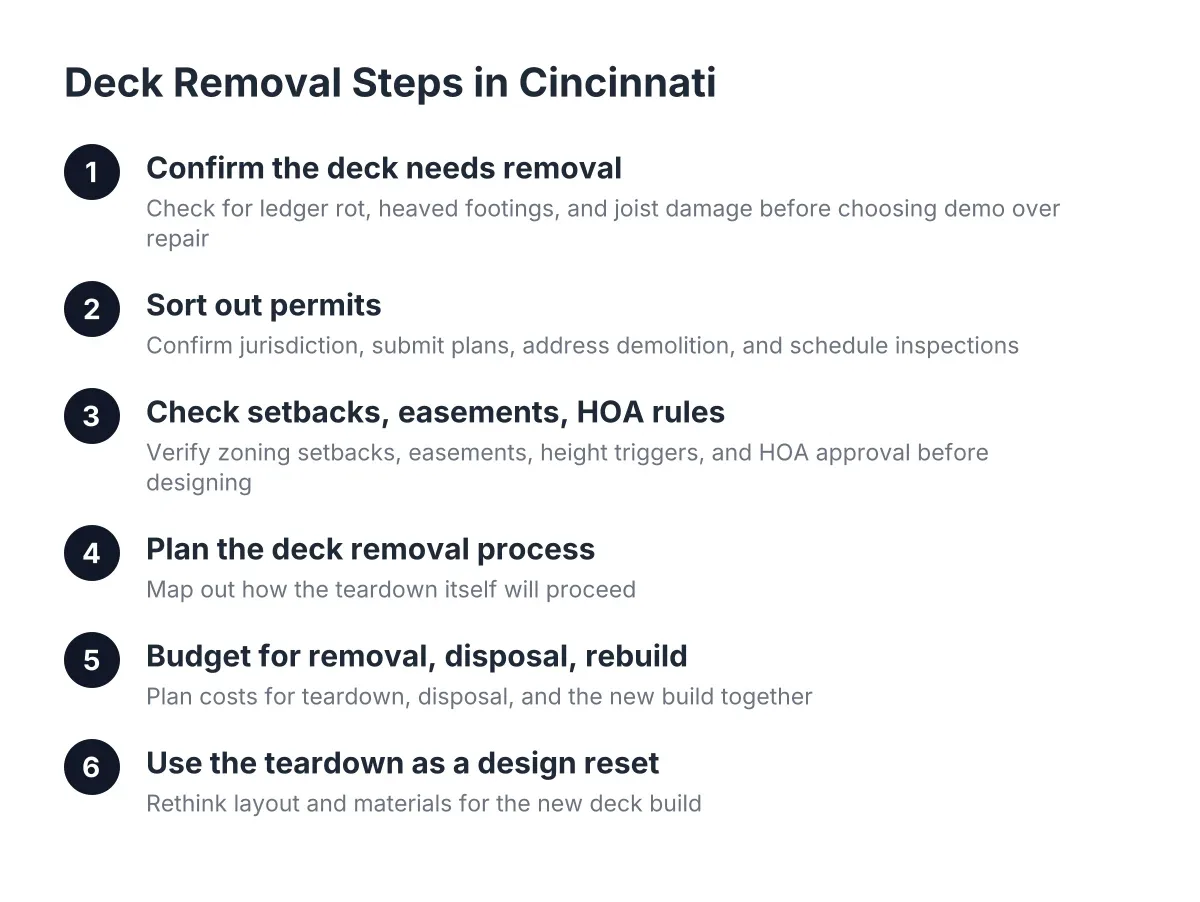
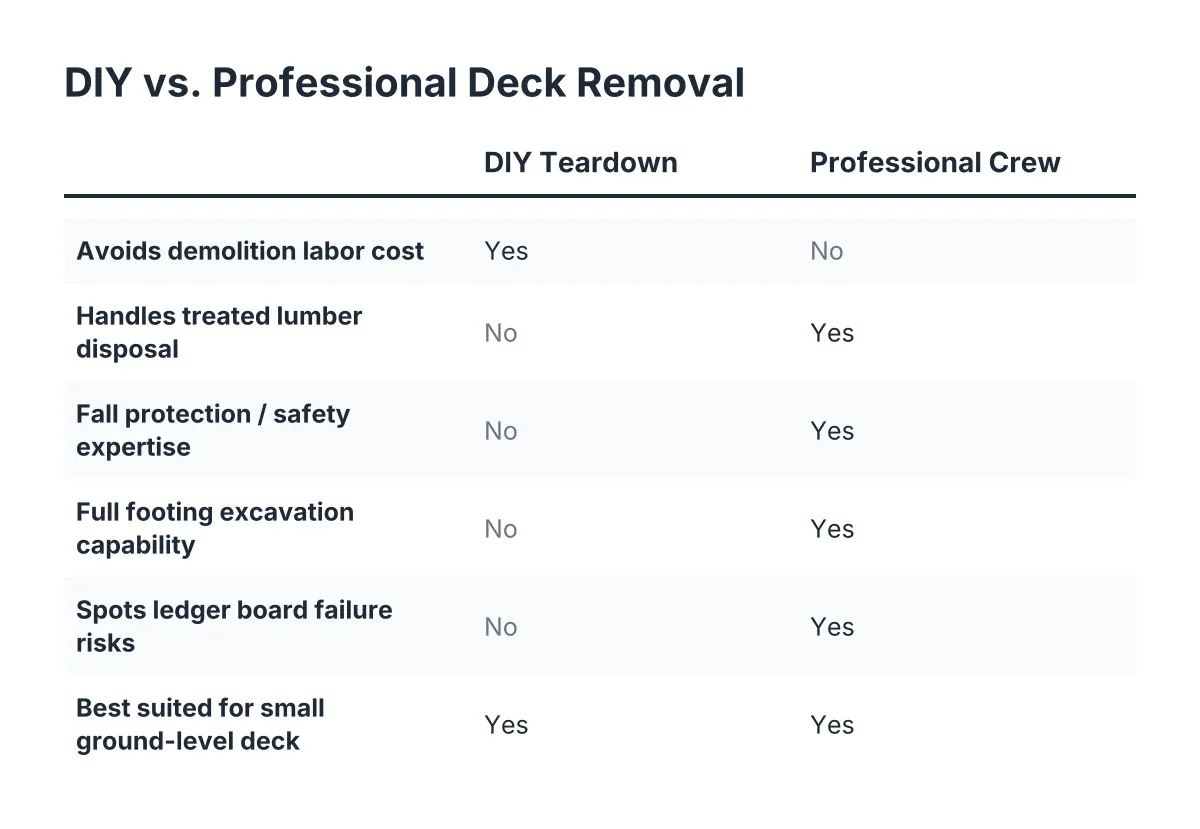
Demolition, or demo, means taking the existing deck apart and removing it so a new structure can go in its place. On most residential jobs this is careful disassembly with hand and power tools, not a wrecking ball. It matters because demo labor is a real line item in a deck demolition and replacement quote, and a contractor who skips it in writing may add it later. If your old deck is attached to the house, ask how they will protect the siding during removal. Our guide to deck removal services in Cincinnati walks through what proper demolition and disposal look like.
Tear-Off
A tear-off is the complete removal of a deck, including the boards, framing, railings, and usually the footings, down to bare ground. It is the opposite of resurfacing, where the frame stays. A full tear-off costs more than a partial one, but it lets the builder start fresh with new footings and framing. Ask whether the quote is a full tear-off or whether anything stays behind, because buried footings left in the ground can complicate the new layout.
Haul-Away and Disposal
Haul-away and disposal means loading the demolition debris and getting it legally off your property, usually by truck or dumpster. Old treated lumber cannot go in regular trash in many areas, so proper disposal is part of doing the job right. If a quote does not mention disposal, ask where the debris goes and who pays the dump fees. A pile of old deck boards left by your garage is a sign the scope was never nailed down.
Demolition Permit
A demolition permit is the local building department's written approval to remove a structure. Not every deck removal needs one, but attached decks and larger structures often do, and the rules vary by city and county around greater Cincinnati. Pulling the right permit protects you at resale, since unpermitted work can surface during a home inspection. See our step-by-step guide to deck removal permits and setback rules in Cincinnati for how the local process works.
Deck Demolition and Replacement: Structure and Materials
Ledger Board
A ledger board is the horizontal board bolted to your house that an attached deck hangs from. It carries a large share of the deck's weight, so a rotted or poorly fastened ledger is one of the most common reasons decks fail. During demolition, the builder sees exactly what the old ledger did to your siding and rim joist. If a contractor mentions ledger damage, expect the scope to include repairs to the house framing before the new deck goes up.
Footings
Footings are the concrete bases set in the ground that support the deck's posts. They spread the deck's weight so it does not sink or shift. In a full replacement, old footings usually come out and new ones go in, sized for the new design. Shallow or undersized footings are a frequent reason an older Cincinnati deck gets replaced instead of repaired.
Frost Depth
Frost depth is how deep the ground freezes in winter, and footings must sit below that line so they do not heave when the soil freezes and thaws. Ohio's freeze-thaw cycles make this a real concern, not a technicality. A footing poured above frost depth can lift and drop with the seasons, which cracks framing and tilts the deck. Ask your deck builder how deep the new footings will go; a confident, specific answer is a good sign.
Framing (Substructure)
Framing, also called the substructure, is the skeleton of posts, beams, and joists that holds up the deck surface. The framing determines how long the deck lasts, no matter how nice the boards on top look. Rotted framing is the usual reason resurfacing is off the table and full replacement is the honest recommendation. If you are unsure which camp your deck falls in, our breakdown of deck demolition vs. repair in Cincinnati covers the warning signs.
Joists
Joists are the parallel framing boards, usually spaced a consistent distance apart, that the deck boards fasten to. Joist spacing matters because composite decking often requires closer spacing than wood. If you are switching from treated wood to composite in your replacement, the builder may need to add joists or reframe entirely. That detail should show up in the quote, not as a surprise later.
Decking (Deck Boards)
Decking refers to the boards that form the walking surface of the deck. It is what you see and touch, but it is only one part of the project cost. Decking choices range from treated wood to composite, and the choice drives both the price and how much maintenance you sign up for. A clear quote names the decking material, not just "new boards."
Composite Decking
Composite decking is board made from a blend of wood fiber and plastic, built to resist rot, splinters, and fading better than bare wood. It costs more up front than treated lumber but skips the staining and sealing routine. Composite is heavier and flexes differently than wood, which is why it has its own framing and fastener requirements. If your quote lists composite decking, confirm the framing plan supports it.
Treated Wood Decking
Treated wood decking is lumber infused with preservatives under pressure so it resists rot and insects. It is the budget-friendly standard for deck surfaces and framing, and it holds up well in Ohio weather when stained and sealed on a regular schedule. The tradeoff is maintenance: treated wood needs ongoing care that composite does not. Many replacement projects pair a treated wood frame with a composite surface to balance cost and upkeep.
Deck Resurfacing
Deck resurfacing means removing the old boards and railings while keeping the existing frame, then installing new decking on top. It is the middle path between repair and full deck demolition and replacement, and it only works when the framing and footings are still sound. A good deck contractor will inspect the substructure before promising resurfacing. If the frame fails inspection, the honest answer is a tear-off, and the cost guide for deck demolition and replacement explains what drives that number.
Flashing
Flashing is the metal or waterproof barrier installed where the deck's ledger board meets the house, directing water away from the wall. Missing or failed flashing lets water rot the house framing behind the deck, which is damage you cannot see until demolition. New flashing should be standard on any attached deck rebuild. If a quote never mentions it, ask.
Railing System
A railing system is the set of posts, top and bottom rails, and balusters that enclose the edges of a deck. Building codes typically require railings above a certain deck height, so most replacement decks need them. Railing material and style, from wood to metal to composite, can swing the project cost noticeably. Make sure the quote specifies the railing type, not just "railing included."
Paperwork and Pricing Terms
Building Permit
A building permit is the local building department's approval to construct the new deck, based on submitted plans. It triggers inspections at key stages, such as footings and framing, which protect you by catching problems early. In greater Cincinnati, the permit path depends on whether you are inside city limits or in a township, so confirm who is pulling the permit. A contractor who pulls permits in their own name is taking responsibility for the work.
Setback
A setback is the minimum distance a structure must sit from your property lines, set by local zoning rules. Setbacks can limit where and how large your replacement deck can be, especially on smaller Cincinnati lots. HOA rules sometimes add their own restrictions on top of zoning. Check setbacks before falling in love with a design, because a deck built over the line can be forced to come down.
Scope of Work
A scope of work is the written section of a contract or quote that lists exactly what the contractor will and will not do. For a replacement project, it should cover demolition, disposal, permits, footings, framing, decking material, railings, and cleanup. Vague scopes cause most pricing disputes. Reading the scope line by line is the single best way to compare two bids fairly.
Change Order
A change order is a written amendment to the contract that documents a change in work, price, or schedule after the project starts. Hidden rot found during demolition is the classic trigger on replacement jobs. A change order protects both sides because the new cost gets agreed to in writing before the extra work happens. Verbal "we'll figure it out" arrangements are where budgets go sideways.
Using These Terms
What this deck demolition and replacement glossary gives you is the vocabulary to read a quote the way a builder does: demo and disposal first, then structure, then surface, then paperwork. When a line item is vague, you now know the question to ask, whether it is about frost depth, flashing, or who pulls the permit. That is usually all it takes to tell a thorough bid from a thin one.
If you need deck building and installation, Cincinnati Deck Pros can help.
Prefer to talk it through? Call (513) 613-3364 — a quick call is usually the fastest way to get a straight answer for your situation.